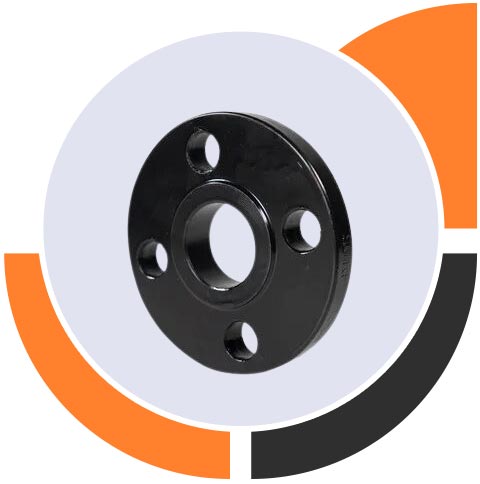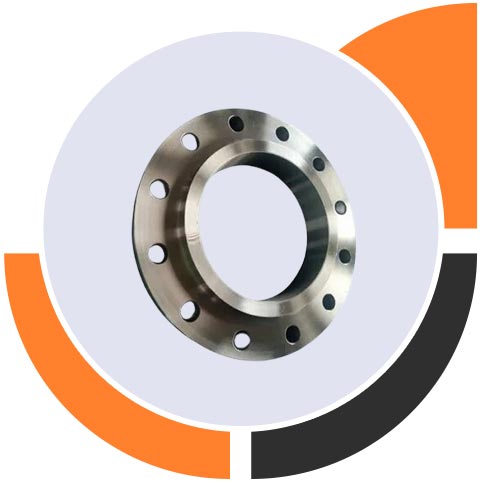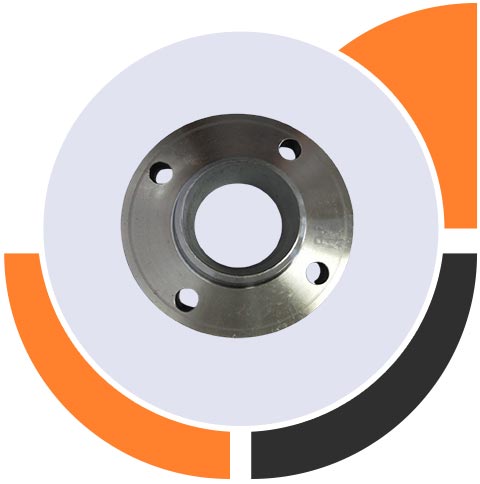
ASTM A105 Flange
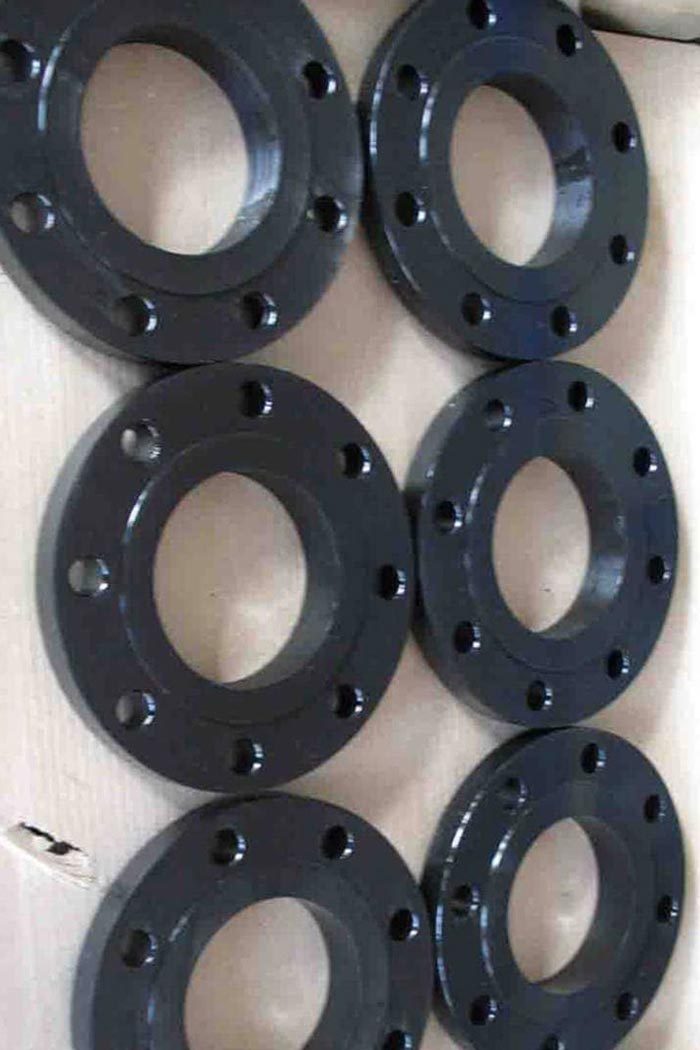
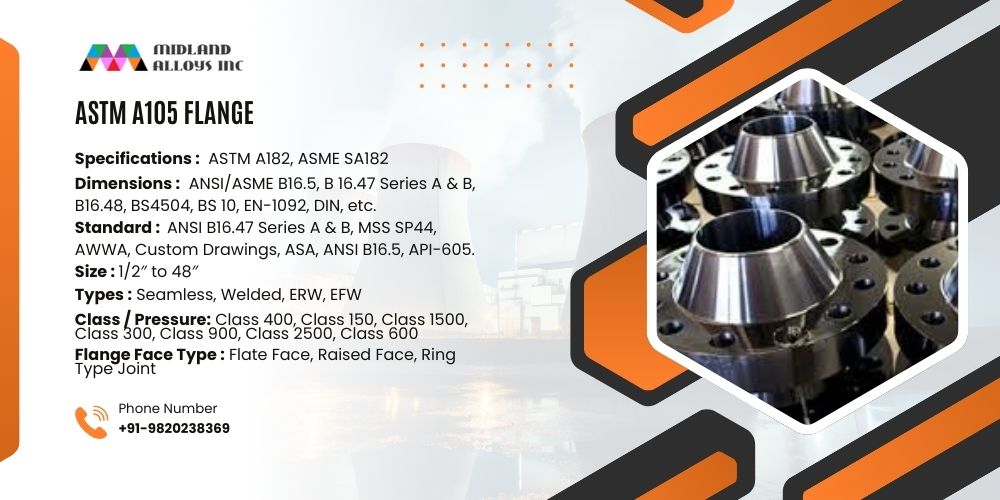
Midland Alloys Inc. is a leading astm a105 flanges manufacturer in India, which are used in pressure systems and high-temperature environments. These flanges have a high tensile strength, excellent machinability, and good weldability. ASTM A105 carbon steel flange is resistant to wear and thermal fatigue, making them durable in harsh environments. We offer several types of flanges, including weld neck, socket weld, blind, threaded, and slip-on. It is widely used in pipelines, refineries, power plants, and boiler systems. These flanges meet the ASTM A105, ASME B16.5, and ANSI standards. Explore available sizes, pressure classes, and test certifications below.
Product Overview
ASTM A105 is a carbon steel alloy used to make carbon steel forged flange, valves and fittings for pressure piping systems. These flanges work well in both normal and high-temperature environments due to their strength and thermal stability. The ASTM A105 flange chemical composition includes about 0.26% carbon, 0.6–0.9% manganese and 0.35% silicon, along with trace elements like phosphorus and sulfur. This gives the flanges high hardness, good strength, and impact toughness. With good weldability and resistance to wear under pressure cycles, ASTM A105 carbon steel flanges are cost-effective option. These flanges meet ASME B16.5 flange specifications. A105 weld neck flange use is common in high-load systems.
Key Benefits of ASTM A105 Flanges
ASTM A105 flanges are well-known for their durability, affordability, and versatility in high-pressure piping applications. Forged from carbon steel, they provide excellent mechanical performance in industrial systems.
- Strong tensile and yield strength for high-pressure environments.
- Good machinability and weldability with stable dimensions.
- Works well in both ambient and high-temperature systems.
- Meet ASME B16.5 pressure ratings from Class 150 to 2500.
- Available in raised face, flat face, and RTJ styles.
- Suited for forged parts needing impact toughness and hardness.
ASTM A105 Flanges Standard Specification
This section provides standard technical details like material grade, size range, pressure classes, and face types. It helps ensure the product aligns with your system’s design codes and operating needs.

1/2″NB TO 60″NB

ASTM B564 / ASME SB564

ANSI/ASME B16.5, B 16.47 Series A & B, B16.48, BS4504, BS 10, EN-1092, DIN, etc.

Threaded / Screwed / Forged / Plate

150#, 300#, 600#, 900#, 1500#, 2500#, PN6, PN10, PN16, PN25, PN40, PN64 etc.

Flate Face (FF), Raised Face (RF), Ring Type Joint (RTJ)

Forging, Rolling, Casting

FNPT, NPT, BSPT, MNPT, BSPP
Contact us today to discuss how ASTM A105 Flanges can benefit your application. Whether you need guidance in selecting the right pipes or have specific requirements, our team of experts is here to help you find the optimal solution.
Technical Details & Delivery Condition
Below table includes the core elements and their percentages in ASTM A105 carbon steel. This helps assess performance traits like strength, weldability, and corrosion resistance.
| Element | Carbon | Manganese | Phosphorus | Sulfur | Silicon | Copper | Nickel | Chromium | Molybdenum | Vanadium |
|---|---|---|---|---|---|---|---|---|---|---|
| Composition, % | 0.35 max | 0.60 – 1.05 | 0.035 max | 0.040 max | 0.10 – 0.35 | 0.40 max (1) | 0.40 max (1) | 0.30 max (1-2) | 0.12 max (1-2) | 0.08 max |
ASTM A105 carbon steel properties such as tensile strength, yield strength, elongation, and hardness values are given below. This data helps engineers confirm that the flanges meet system load and stress conditions.
| Mechanical Properties | Tensile Strength, min, psi [MPa] | Yield Strength, min, psi [MPa] | Elongation, min, % | Reduction of Area, min, % | Hardness, HB, max |
|---|---|---|---|---|---|
| Requirements | 70000 [485] | 36000 [250] | 30 | 30 | 187 |
The basic dimensions of the ANSI B16.5 A105 flange are listed below, including the outside diameter, bolt circle diameter, and number of holes. This helps you match your piping components to the appropriate flange size.
| ø | D | b | g | k | Holes | l | Kg. |
|---|---|---|---|---|---|---|---|
| 1/2″ | 88,9 | 11,1 | 34,9 | 60,3 | 4 | 15,9 | 0,400 |
| 3/4″ | 98,4 | 12,7 | 42,9 | 69,8 | 4 | 15,9 | 0,700 |
| 1″ | 107,9 | 14,3 | 50,8 | 79,4 | 4 | 15,9 | 0,900 |
| 1 1/4″ | 117,5 | 15,9 | 63,5 | 88,9 | 4 | 15,9 | 1,300 |
| 1 1/2″ | 127,0 | 17,5 | 73,0 | 98,4 | 4 | 15,9 | 1,600 |
| 2″ | 152,4 | 19,0 | 92,1 | 120,6 | 4 | 19,0 | 2,600 |
| 2 1/2″ | 177,8 | 22,2 | 104,8 | 139,4 | 4 | 19,0 | 4,100 |
| 3″ | 190,5 | 23,8 | 127,0 | 152,4 | 4 | 19,0 | 5,000 |
| 3 1/2″ | 215,9 | 23,8 | 139,7 | 177,8 | 8 | 19,0 | 6,400 |
| 4″ | 228,6 | 23,8 | 157,2 | 190,5 | 8 | 19,0 | 7,100 |
| 5″ | 254,0 | 23,8 | 185,7 | 215,9 | 8 | 22,2 | 9,000 |
| 6″ | 279,4 | 25,4 | 215,9 | 241,3 | 8 | 22,2 | 11,800 |
| 8″ | 342,9 | 28,6 | 269,9 | 298,4 | 8 | 22,2 | 21,000 |
| 10″ | 406,4 | 30,2 | 323,4 | 361,9 | 12 | 25,4 | 30,000 |
| 12″ | 482,6 | 31,7 | 381,0 | 431,8 | 12 | 25,4 | 45,000 |
| 14″ | 533,4 | 34,9 | 412,7 | 476,2 | 12 | 28,6 | 59,000 |
| 16″ | 596,9 | 36,5 | 469,9 | 539,9 | 16 | 28,6 | 79,000 |
| 18″ | 635,0 | 39,7 | 533,4 | 577,8 | 16 | 31,7 | 97,000 |
| 20″ | 698,5 | 42,9 | 584,2 | 635,0 | 20 | 31,7 | 124,000 |
| 22″ | 749,3 | 46,0 | 641,2 | 692,1 | 20 | 34,9 | 151,000 |
| 24″ | 812,8 | 47,6 | 692,1 | 749,3 | 20 | 34,9 | 188,000 |
The chart shows the thickness ranges for different ASTM A105 flange sizes and pressure ratings. Effective in ensuring proper fit and structural integrity.
| Nominal Size | Outside Diameter (OD) | Bore Diameter (B) | No. of Bolt Holes | Bolt Hole Diam. | Bolt Circle (BC) | Thickness (T) | Hub Length (L) | Hub Diam. (H) | Lap Radius ( R ) | Approx. Weight (lbs) |
| 1 | 4.25 | 1.38 | 4 | 0.625 | 3.13 | 0.563 | 0.688 | 1.938 | 0.13 | 2 |
| 1 1/4 | 4.68 | 1.72 | 4 | 0.625 | 3.50 | 0.625 | 0.813 | 2.312 | 0.19 | 3 |
| 1 1/2 | 5.00 | 1.97 | 4 | 0.625 | 3.88 | 0.688 | 0.875 | 2.563 | 0.25 | 3 |
| 2 | 6.00 | 2.46 | 4 | 0.750 | 4.75 | 0.750 | 1.000 | 3.063 | 0.31 | 5 |
| 2 1/2 | 7.00 | 2.97 | 4 | 0.750 | 5.50 | 0.875 | 1.125 | 3.563 | 0.31 | 7 |
| 3 | 7.50 | 3.60 | 4 | 0.750 | 6.00 | 0.938 | 1.188 | 4.250 | 0.38 | 8 |
| 3 1/2 | 8.50 | 4.10 | 8 | 0.750 | 7.00 | 0.938 | 1.250 | 4.812 | 0.38 | 11 |
| 4 | 9.00 | 4.60 | 8 | 0.750 | 7.50 | 0.938 | 1.312 | 5.312 | 0.44 | 13 |
| 5 | 10.00 | 5.69 | 8 | 0.875 | 8.50 | 0.938 | 1.438 | 6.438 | 0.44 | 15 |
| 6 | 11.00 | 6.75 | 8 | 0.875 | 9.50 | 1.000 | 1.562 | 7.562 | 0.50 | 18 |
| 8 | 13.50 | 8.75 | 8 | 0.875 | 11.75 | 1.125 | 1.750 | 9.688 | 0.50 | 30 |
| 10 | 16.00 | 10.92 | 12 | 1.000 | 14.25 | 1.188 | 1.938 | 12.000 | 0.50 | 42 |
| 12 | 19.00 | 12.92 | 12 | 1.000 | 17.00 | 1.250 | 2.188 | 14.375 | 0.50 | 64 |
| 14 | 21.00 | 14.19 | 12 | 1.125 | 18.75 | 1.375 | 2.250 | 15.750 | 0.50 | 90 |
| 16 | 23.50 | 16.19 | 16 | 1.125 | 21.25 | 1.438 | 2.500 | 18.000 | 0.50 | 98 |
| 18 | 25.00 | 18.20 | 16 | 1.250 | 22.75 | 1.562 | 2.688 | 19.875 | 0.50 | 125 |
| 20 | 27.50 | 20.25 | 20 | 1.250 | 25.00 | 1.688 | 2.875 | 22.000 | 0.50 | 160 |
| 24 | 32.00 | 24.25 | 20 | 1.375 | 29.50 | 1.875 | 3.250 | 26.125 | 0.50 | 212 |
| 30** | 38.75 | 30.25 | 28 | 1.375 | 36.00 | 2.125 | 3.500 | 32.750 | 0.50 | 305 |
| 36** | 46.00 | 36.25 | 32 | 1.625 | 42.75 | 2.375 | 3.750 | 39.250 | 0.50 | 440 |
ANSI B16.5 A105 flange pressure class at various temperatures is given below. This helps confirm suitability in both low and high-temp systems.
| TEMP °C |
150 | 300 | 400 | 600 | 900 | 1500 | 2500 |
|---|---|---|---|---|---|---|---|
| -29 TO 38 | 19.6 | 51.1 | 68.1 | 102.1 | 153.2 | 255.3 | 425.5 |
| 50 | 19.2 | 50.1 | 66.8 | 100.2 | 150.4 | 250.6 | 417.7 |
| 100 | 17.7 | 46.6 | 62.1 | 93.2 | 139.8 | 233 | 388.3 |
| 150 | 15.8 | 45.1 | 60.1 | 90.2 | 135.2 | 225.4 | 375.6 |
| 200 | 13.8 | 43.8 | 58.4 | 87.6 | 131.4 | 219 | 365 |
| 250 | 12.1 | 41.9 | 55.9 | 83.9 | 125.8 | 209.7 | 349.5 |
| 300 | 10.2 | 39.8 | 53.1 | 79.6 | 119.5 | 199.1 | 331.8 |
| 325 | 9.3 | 38.7 | 51.6 | 77.4 | 116.1 | 193.6 | 322.6 |
| 350 | 8.4 | 37.6 | 50.1 | 75.1 | 112.7 | 187.8 | 313 |
| 375 | 7.4 | 36.4 | 48.5 | 72.7 | 109.1 | 181.8 | 303.1 |
| 400 | 6.5 | 34.7 | 46.3 | 69.4 | 104.2 | 173.6 | 289.3 |
| 425 | 5.5 | 28.8 | 38.4 | 57.5 | 86.3 | 143.8 | 239.7 |
| 450 | 4.6 | 23 | 30.7 | 46 | 69 | 115 | 191.7 |
| 475 | 3.7 | 17.4 | 23.2 | 34.9 | 52.3 | 87.2 | 145.3 |
| 500 | 2.8 | 11.8 | 15.7 | 23.5 | 35.3 | 58.8 | 97.9 |
| 538 | 1.4 | 5.9 | 7.9 | 11.8 | 17.7 | 29.5 | 49.2 |
| TEMP °C |
150 | 300 | 400 | 600 | 900 | 1500 | 2500 |
ASTM A105 Flanges Grades We Offer
Plate

Shear

Press

Inspection

Lathe

Drilling

Cleaning

Flange

Inspection

Analytic

Marking

Packing & Shipping
Applications of ASTM A105 flanges
The oil and gas industry uses ASTM A105 flanges to connect high-pressure pipelines, valves, and pumps. Refineries and petrochemical plants use them in distillation and heat exchanger units. These flanges are used in steam and pressure lines in power generation plants. Water treatment facilities install flanges in pump stations and distribution systems. In chemical plants, they handle fluid transfer and process lines. Boiler and pressure vessel fabricators rely on them for flange connections in sealed systems. They are also widely used in general industrial piping setups.
Testing & Packaging
All flanges goes through PMI, ultrasonic, hydrostatic, and visual testing to confirm product integrity. A105 flanges are securely packed in wooden boxes with plastic wrapping and export labels for safe transit and identification.
Why Choose Us
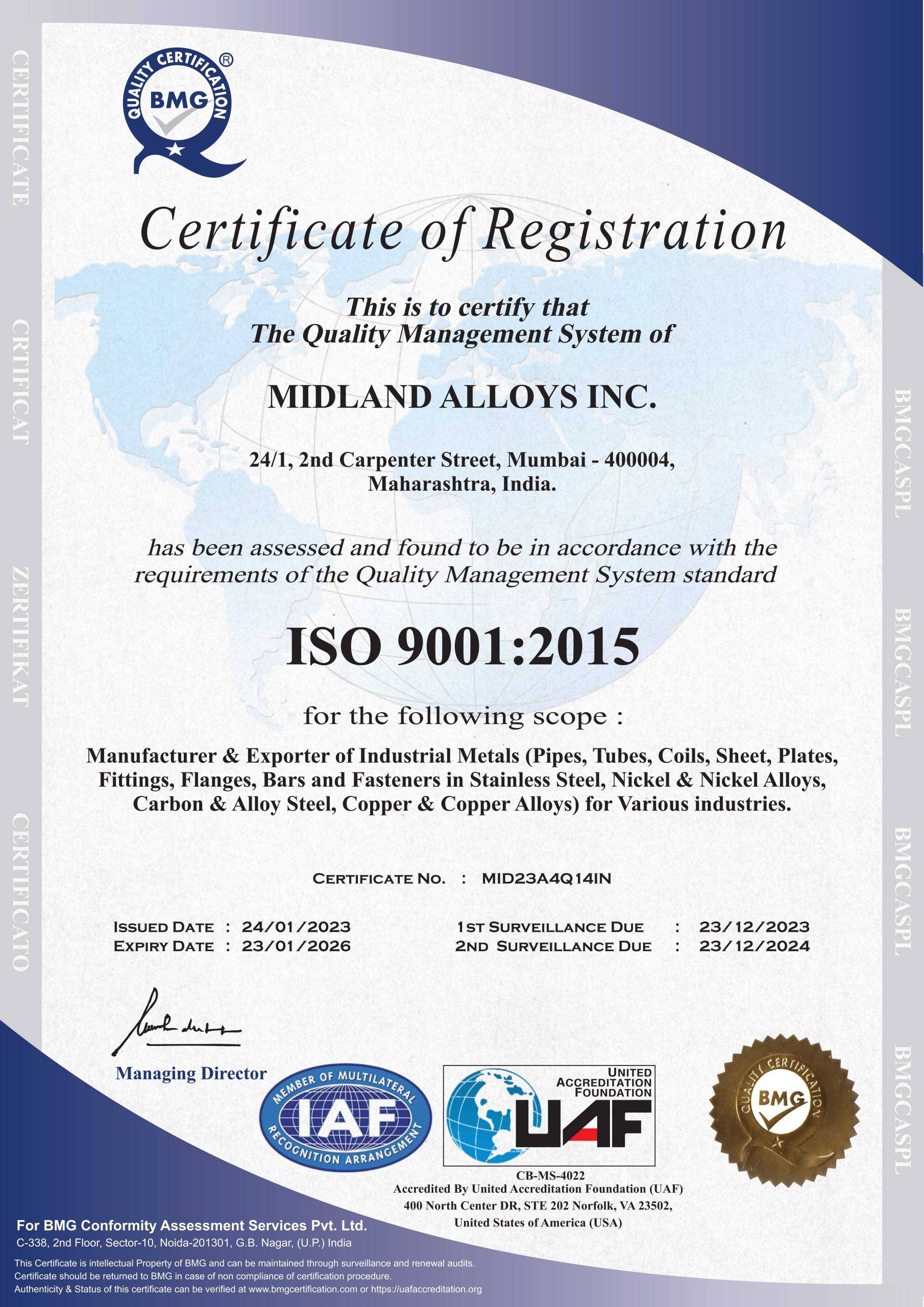
Midland Alloys is an ISO 9001, PED, and IBR-certified manufacturer. We offer NABL-approved lab reports and mill test certificates. As a certified exporter, we follow to global standards that ensure complete material traceability through proper markings and documentation. We export to over 20 countries with timely delivery. Our flanges are available in custom sizes, finishes, and shapes. Our 24-hour support team ensures smooth service and prompt response.
FAQ
Weld neck, blind, slip-on, threaded, and socket weld flanges are commonly made using ASTM A105.
Yes. ASTM A105 flanges have good weldability and are widely used in welded piping systems.
Yes. Heat treatment is needed when the final product thickness exceeds certain limits or when specified by code.