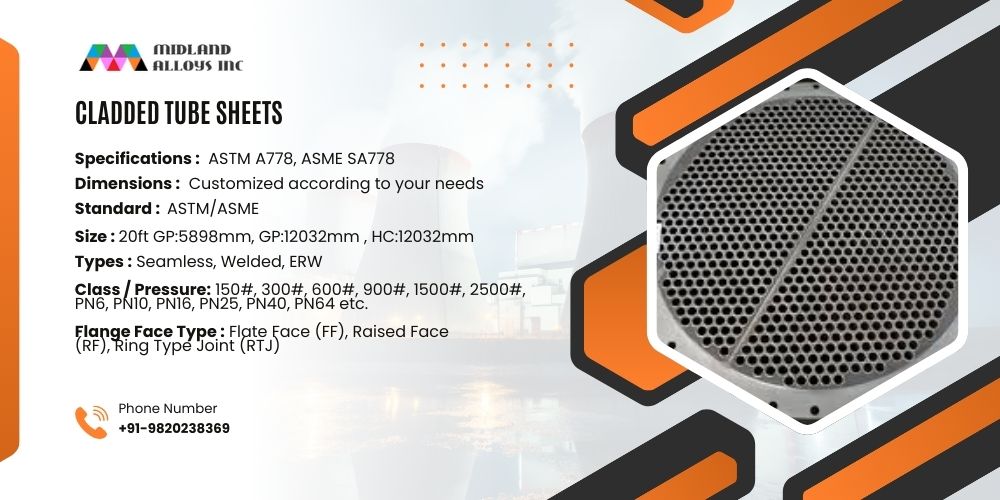
CLADDED TUBE SHEETS : Manufacturer
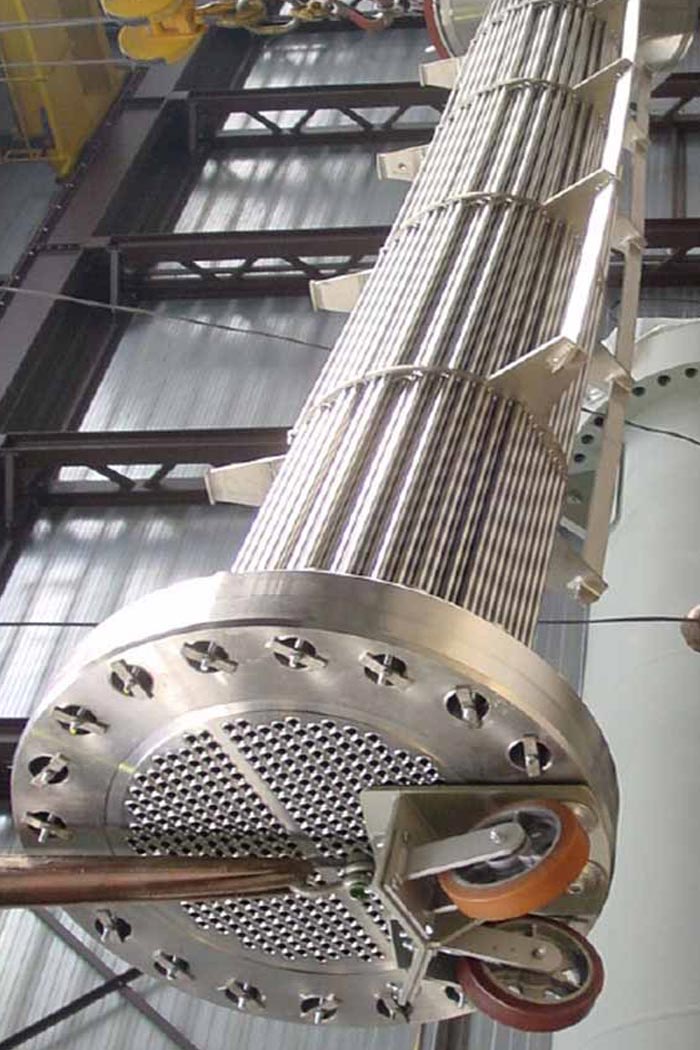
Midland Alloys Inc. is a trusted Indian manufacturer and global supplier of Clad Tube Sheet, offering quality solutions to meet the growing demands of the heat exchanger and pressure vessel industry. As a reputed cladded tube sheet stockist in Mumbai, we supply both standard and custom specifications for industrial-scale operations. Our clad tubesheets are built by metallurgically bonding a corrosion-resistant alloy layer onto a base metal like carbon, or low alloy steel. This fusion ensures optimal resistance against corrosive fluids while maintaining structural strength. In order to ensure good performance and compliance across various industries, each cladded tube sheet is provided with comprehensive information about its mechanical properties, including tensile strength, elongation and reduction of area, all of which are in accordance with international standards.
Benefits of Clad Tube Sheet
Clad Tube Sheets are a cost-effective and performance-driven alternative to solid alloy sheets. They are specifically designed for environments exposed to aggressive chemical conditions, high temperatures, or pressure cycling. These tube sheets balance corrosion resistance and mechanical strength, helping users extend equipment life while controlling overall costs.
- Outstanding resistance to chemical erosion and corrosion
- Extended lifespan in situations with high temperatures, salty and acidity
- With time it reduced maintenance and repair expenses
- Seamless incorporation into current designs and equipment
- Improved safety by metallurgical bonding and uniform wall thickness
- Less expensive than sheets of strong alloy with similar performance
Clad Tube Sheet Specification

1/2" (15 NB) to 48" (1200NB)

ASTM A778, ASME SA77

Customized according to your needs

Threaded / Screwed / Forged / Plate

150#, 300#, 600#, 900#, 1500#, 2500#, PN6, PN10, PN16, PN25, PN40, PN64 etc.

Flate Face (FF), Raised Face (RF), Ring Type Joint (RTJ)

Forging, Rolling, Casting

FNPT, NPT, BSPT, MNPT, BSPP
Contact us today to discuss how Clad Tube Sheet can benefit your application. Whether you need guidance in selecting the right pipes or have specific requirements, our team of experts is here to help you find the optimal solution.
Technical Details & Delivery Condition
| Element | Weight % |
|---|---|
| Copper | 76.0-79.0 |
| Zinc | Reminder |
| Aluminium | 1.8-2.5 |
| Arsenic | 0.02-0.06 |
| Lead | 0.07 |
| Iron | 0.06 max |
| Physical Properties | Condition | ||
|---|---|---|---|
| T (°C) | Treatment | ||
| Density (×1000 kg/m3) | 8.33 | 25 | |
| Poisson’s Ratio | 0.34 | 25 | |
| Elastic Modulus (GPa) | 117 | 25 | |
| Tensile Strength (Mpa) | 34 | 2 | |
| Yield Strength (Mpa) | 125 | ||
| Elongation (%) | |||
| Reduction in Area (%) | |||
| STANDARD | UNS | WERKSTOFF NR. |
|---|---|---|
| Aluminium Brass | C68700 | 2.0460 / 1785 |
Difference Between Clad Tube Sheet and SA178 Tubes
SA178 tubes and a clad tube sheet are very different in terms of structure and use. A flat metal plate known as a clad tube sheet is usually composed of carbon steel, and has a layer of a corrosion resistant alloy, like Inconel, or stainless steel, bonded to the surface that is exposed to corrosive environments. It is used in heat exchangers to support, and seal the ends of tubes while resisting corrosion from process fluids. SA178 tubes, on the other hand, are carbon steel boiler tubes, that are produced in accordance with ASME SA178 regulations and are frequently used in superheaters and high-pressure steam boilers. These seamless, or electric-resistance-welded tubes are intended to carry high temperature fluids under pressure. Whereas the tube sheet serves as a structural and sealing element, SA178 tubes serve as heat transfer conduits within thermal systems with standardized tensile strength, wall thickness and chemical composition requirements.
Plate

Shear

Press

Inspection

Lathe

Drilling

Cleaning

Flange

Inspection

Analytic

Marking

Packing & Shipping
Applications of Clad Tube Sheet
Cladded tube sheets are widely used in industries that require high corrosion resistance without compromising structural integrity. They are critical in shell-and-tube heat exchangers, pressure vessels, and boilers where aggressive process fluids and extreme temperatures exist. In chemical processing plants, clad tube sheets handle acidic or caustic solutions, reducing wear and failure rates. In oil and gas refineries, they are used in high-pressure separators and desalters due to their durability and reliability. Power generation facilities rely on tubesheet cladding for improved thermal efficiency in heat transfer systems. Similarly, desalination units, fertiliser plants, and marine engineering systems benefit from their extended service life and minimal maintenance needs. Across industries, clad tube sheets provide a robust, cost-efficient solution tailored to harsh operating environments.
Why Choose Midland Alloys Inc. for Clad Tube Sheet
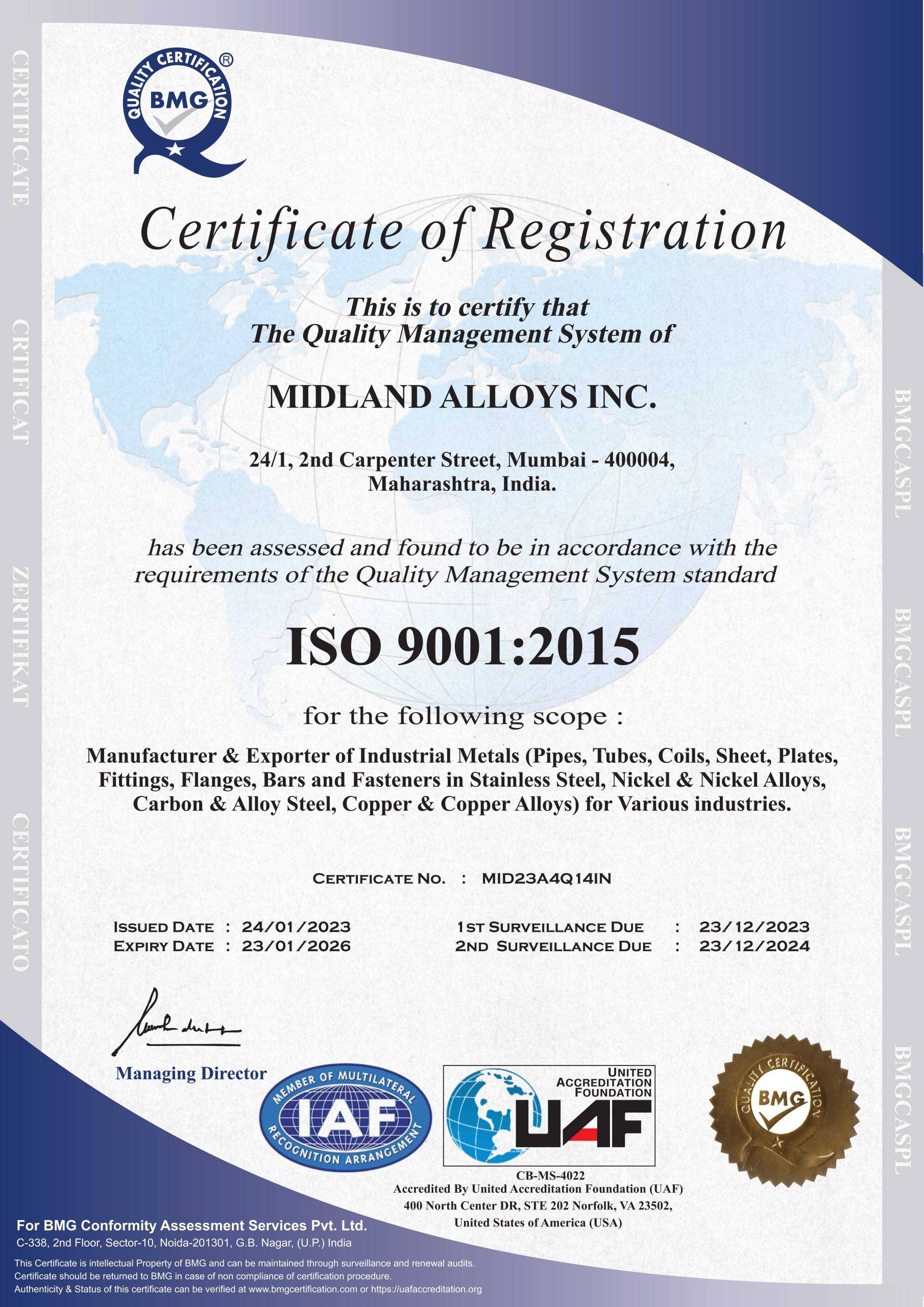
Midland Alloys Inc. is a leading Indian manufacturer and exporter of high-quality Clad Tube Sheet SA 266. As an ISO-certified company, we are committed to precision manufacturing and strict compliance with global engineering standards. We offer extensive customisation options, including cut-to-length configurations, tailored end finishes, special thickness schedules and surface treatments to meet project demands. We use mill certification, third-party and in-house testing methods for our cladded tube sheet materials. Our global supply chain, which includes the Gulf, Europe, Africa, and Southeast Asia, enables us to effectively manage both small and large export orders with timely delivery, project-specific guidance, and a consistent approach to quality assurance and support. All products are marked as per ASTM/ASME standards and are supplied with Mill Test Certificates (MTCs) that verify chemical and mechanical compliance.
FAQs
A tube sheet holds and aligns tubes in pressure vessels and heat exchangers to ensure structural stability under thermal and mechanical loads.
The thickness of the tubesheet ranges from 25 mm to more than 200 mm. It depends on design specifications, temperature and pressure.
Corrugated tubes improve heat transfer performance, limit fouling, and enhance turbulence of the fluid over smooth tubes.
The cost is based on material choice, cladding thickness, number of tubes, and special machining requirements.