Stainless Steel 316Ti Buttweld Fittings Manufacturer

Midland Alloys Inc. is a trusted Indian manufacturer and global supplier of Stainless Steel 316Ti Buttweld Fittings, offering high-quality components for demanding piping systems. These fittings are made from titanium-stabilised austenitic stainless steel, combining chromium, nickel, molybdenum, and titanium to deliver excellent resistance to corrosion and high-temperature scaling. Often known as WP316Ti buttweld fittings, these fittings are appropriate for chemical conveying pipelines, pressure vessels, and heat exchangers as it remains stable during welding and prolonged heat exposure. Our SS 316Ti Seamless Buttweld Fittings and 316Ti SS Welded Buttweld Pipe Fittings are available in a various sizes and schedules with complete traceability and mechanical integrity, and they meet international standards such as ASTM A403, SA403, ANSI B16.9, and ASME B16.28.

SS 316/316L Buttweld Fittings
Stainless Steel 316/316L Buttweld Fittings

Key Benefits of Stainless Steel 316Ti Buttweld Fittings

SS 316Ti Buttweld Fittings offer a strong balance of corrosion resistance, durability, and weldability. These advantages make them a preferred choice for critical fluid and gas transport systems.
  • Superior resistance to intergranular corrosion at high temperatures
  • Excellent strength retention even above 600°C operating temperatures
  • Smooth inner bore minimises turbulence and pressure loss
  • Highly weldable with minimal risk of sensitisation
  • Withstands aggressive media like chlorides and acids
  • Requires less maintenance in harsh chemical and marine environment
  • Reliable sealing for high-pressure fluid transport applications
  • Suitable for forming, bending, and fabrication with minimal cracking

Difference between Stainless Steel 316Ti vs Stainless Steel 904L Buttweld Fittings

SS 316Ti Buttweld Fittings and Stainless Steel 904L Buttweld Fittings both offer strong corrosion resistance, but they differ in composition and performance scope. SS 316Ti contains titanium, which stabilises the steel against carbide precipitation during welding and provides durability in high-temperature service. On the other hand, SS 904L includes higher nickel, and copper content, delivering superior performance in highly acidic environments like sulfuric, acid processing. While SS 904L has a lower yield strength, it excels in extreme corrosion conditions. SS 316Ti remains the better option where heat stability and mechanical strength are prioritized.

Specification of 316Ti ButtWeld Pipe Fittings

This section outlines the general specifications of SS 315Ti butt weld fittings, including standards, dimensions, types, and sizes as per ASTM A403.

Buttweld FIttings
Sizes in Stock

Seamless Butt Weld Fittings: 1/2" - 10" Welded Butt Weld Fittings: 1/2" - 48"

ASTM Standard
Standard

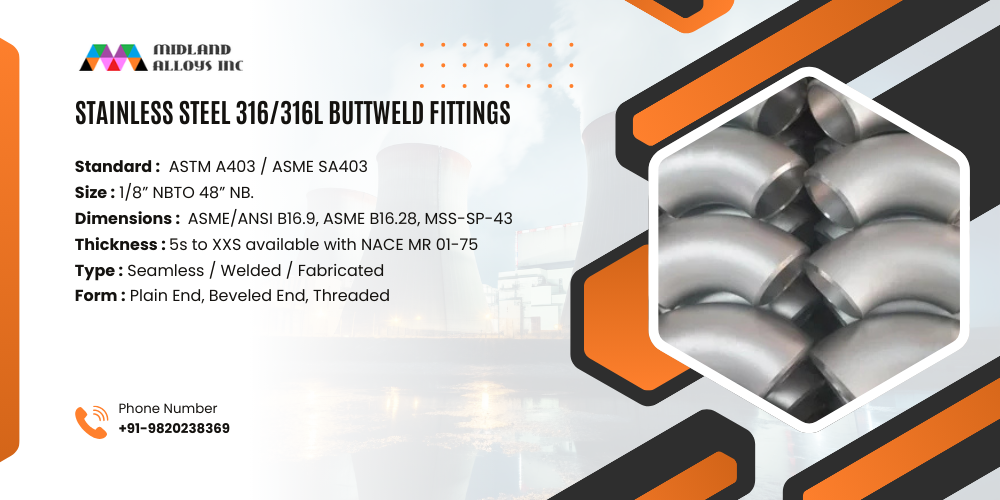
ASTM A403 / ASME SA403

Process
Manufacturing Process

Forge, Cast, Push, Press, etc.

Buttweld Fitting Form
Form

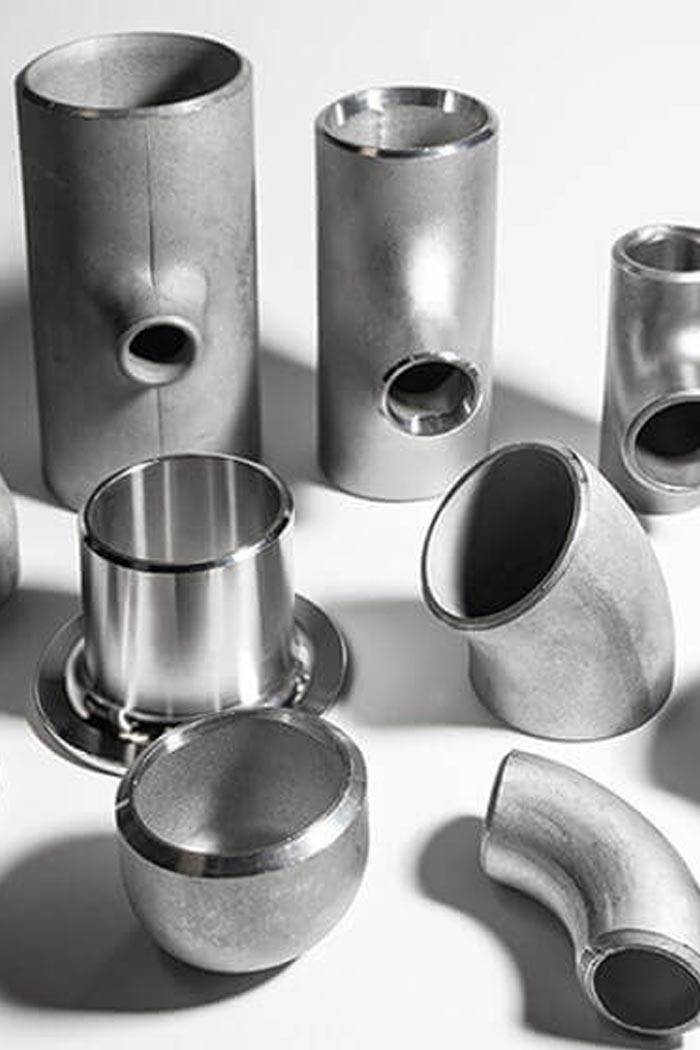
90 Deg. Elbow, 45 Degree Elbow, LR/SR Elbow, Reducers, Tee, Cross, Bends, U bend, 180 Deg Bend, End Cap, Lap-joint Stub End

Dimensions Buttweld Fittings
Dimensions

ASME/ANSI B16.9, ASME B16.28, MSS-SP-43, BS4504, BS4504, BS1560, BS10

Buttweld Fittings End
End

Plain End, Beveled End, Treaded

Schedule
Schedule

SCH10, SCH20, SCH30, STD SCH40, SCH60, XS, SCH 80, SCH 100, SCH 120, SCH 140, SCH 160, XXS available with NACE MR 01-75

Types
Type

Seamless / Welded / Fabricated

Types of 316Ti ButtWeld Pipe Fittings

316Ti stainless steel buttweld fittings are components used to connect, redirect, or terminate sections of pipe in industrial systems. These fittings are well known for their exceptional strength and resistance to corrosion making them perfect for demanding applications involving high pressure and severe conditions. It is frequently used in pipelines for chemicals, oil and gas, and ships. They are available in various types and sizes to match different piping layouts, and system designs.

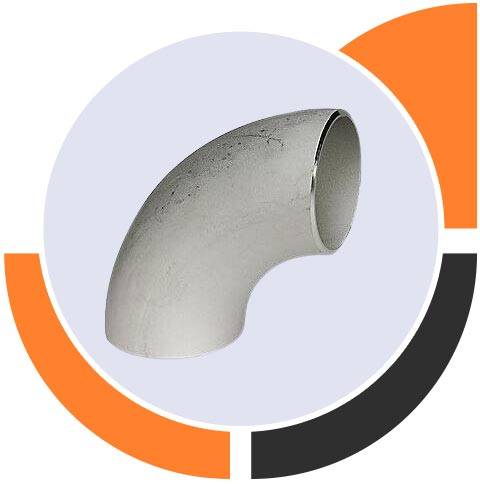
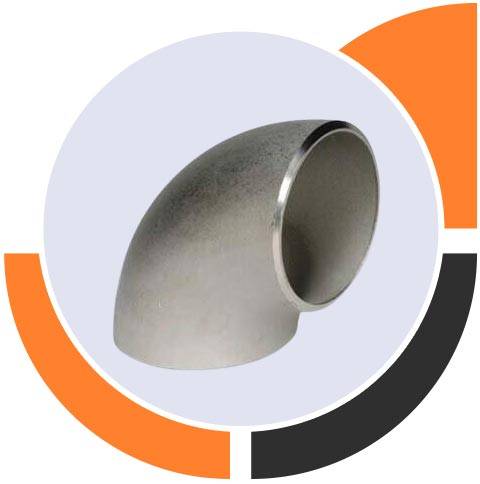
  • Elbow (90°, 45°, Long/Short Radius)
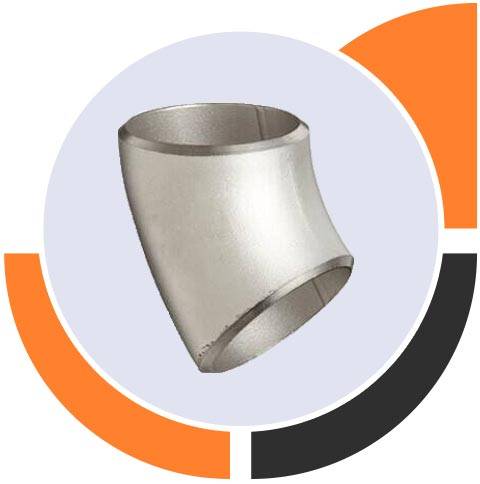
    Elbow (90°, 45°, Long/Short Radius)

    Used to change the direction of flow in a pipeline at specified angles; available in short or long radius.

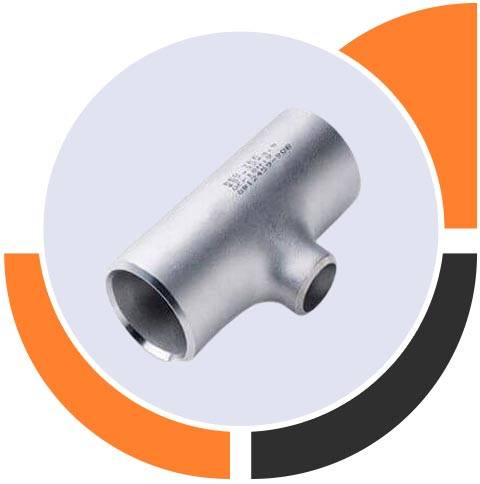
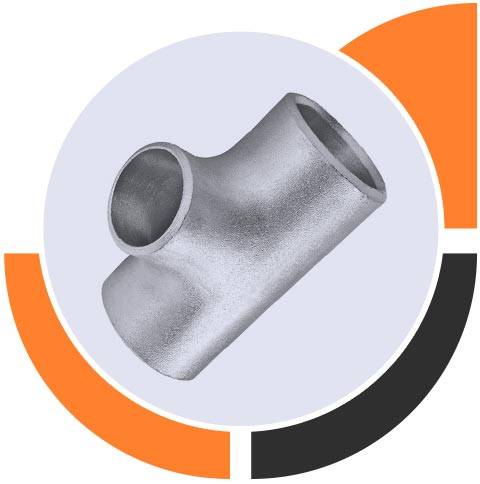
  • Tee (Equal & Reducing)
    Tee (Equal & Reducing)

    Divides flow into two branches; an equal tee has all ends the same size, a reducing tee has one smaller outlet.

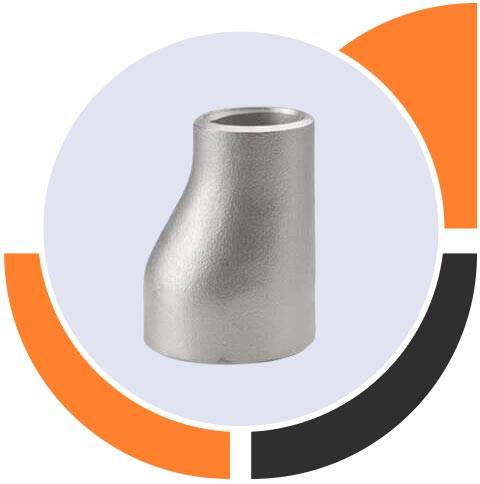
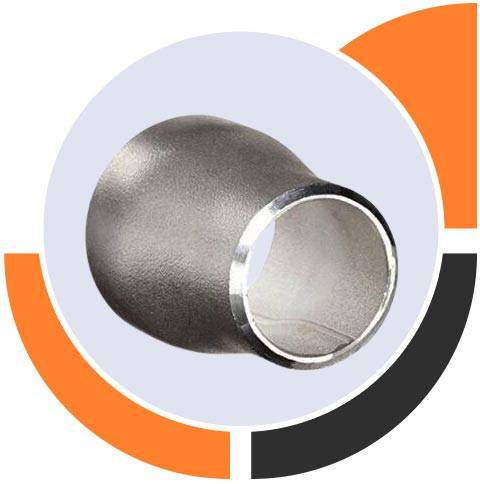
  • Reducer (Concentric & Eccentric)
    Reducer (Concentric & Eccentric)

    Connects pipes of different diameters; concentric type is symmetrical, eccentric has an offset centerline.

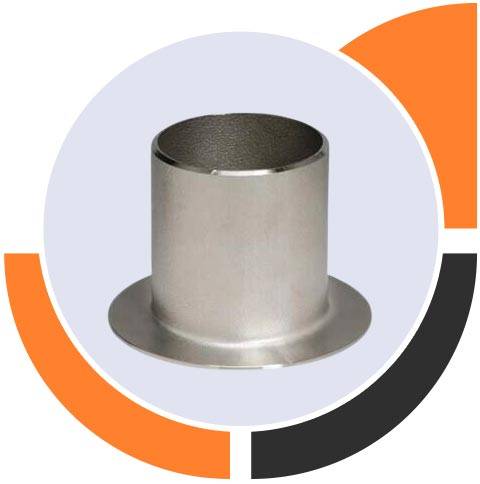
  • Stub End (Short & Long Pattern)
    Stub End (Short & Long Pattern)

    Used with lap joint flanges to allow easy dismantling; available in short and long lengths.

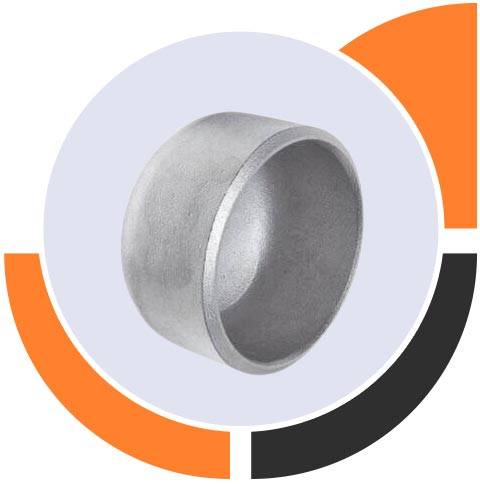
  • End Cap
    End Cap

    Closes the end of a pipe to stop flow and protect the system.

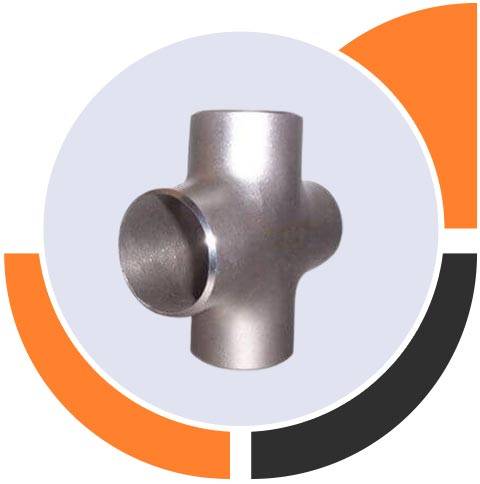
  • Cross (Equal & Reducing)
    Cross (Equal & Reducing)

    Connects four pipes; equal type has all ports the same size, reducing type has different sized outlets.

  • Lateral Tee
    Lateral Tee

    Branches pipe at a 45° angle for smoother flow direction changes.

  • Pipe Bend
    Pipe Bend

    Makes gradual directional changes in piping with large-radius curves.

  • Return Bends (180°)
    Return Bends (180°)

    Turns the flow 180 degrees, commonly used in U-shaped configurations.

  • Collar
    Collar

    Provides a flat surface for bolted connections, often used with flanges.

  • Nipple
    Nipple

    Short length of pipe with male threads or beveled ends for close connection between fittings.

  • Barred Tee
    Barred Tee

    Features a bar across the branch opening to prevent flow into unwanted areas, used in piggable systems.

  • Expansion Joint
    Expansion Joint

    Absorbs thermal expansion and vibration in piping systems.

  • Swage Nipple
    Swage Nipple

    Connects pipes of different diameters, typically from a larger pipe to a smaller one.

  • Reducer Insert
    Reducer Insert

    Inserted into a fitting to reduce the outlet size without using a separate reducer.
Contact Midland Alloys Inc. for Your Stainless Steel 316Ti Buttweld Fittings Needs

Contact us today to discuss how Stainless Steel 316Ti Buttweld Fittings can benefit your application. Whether you need guidance in selecting the right Buttweld Fittings or have specific requirements, our team of experts is here to help you find the optimal solution.

Technical Details & Delivery Condition

The detailed chemical composition of 316 and 316L stainless steel highlights elements like chromium, nickel, molybdenum, and carbon.
Grade C Mn Si P S Cr Mo Ni Fe
SS 316Ti 0.08 max 2.0 max 0.75 max 0.045 max 0.030 max 16.00 – 18.00 2.00 – 3.00 10.00 – 14.00 68.395 min

The mechanical strength table of 316 and 316L outlines tensile strength, yield strength, elongation, and hardness.

GradeTensile Strength (MPa) minYield Strength 0.2% Proof (MPa) minElongation (% in 50mm) minHardness
Rockwell B (HR B) maxBrinell (HB) max
3165152054095217
316L4851704095217
The section compares international grade equivalents of SS 316 and 316L, helping identify corresponding standards like UNS, EN, and JIS.
STANDARD WERKSTOFF NR. UNS JIS BS GOST AFNOR EN
SS 316Ti 1.4571 S31635 SUS 316Ti 320S31 08Ch17N13M2T Z6CNDT17‐123 X6CrNiMoTi17-12-2

The pressure ratings of SS 316 and 316L fittings across various schedules and temperature ranges for safe usage.

NPS (inches)ScheduleWall Thickness (mm)Pressure Rating @100°F (psi)Pressure Rating @100°F (bar)
2″Sch 10S2.7745031
2″Sch 40S3.91120082
2″Sch 80S5.541900131
6″Sch 40S7.1174051
6″Sch 80S10.97123085

Stainless Steel Buttweld Fittings We Offer

Difference between Stainless Steel 316Ti vs Stainless Steel 904L Buttweld Fittings

SS 316Ti Buttweld Fittings and Stainless Steel 904L Buttweld Fittings both offer strong corrosion resistance, but they differ in composition and performance scope. SS 316Ti contains titanium, which stabilises the steel against carbide precipitation during welding and provides durability in high-temperature service. On the other hand, SS 904L includes higher nickel, and copper content, delivering superior performance in highly acidic environments like sulfuric, acid processing. While SS 904L has a lower yield strength, it excels in extreme corrosion conditions. SS 316Ti remains the better option where heat stability and mechanical strength are prioritized.

Manufacturing Process of SS 316Ti Buttweld Fittings

The process starts with choosing certified SS 316Ti Buttweld Fittings that meet strict quality standard. Depending on the type of fitting, we precisely cut the raw material. After that, heat or cold forming techniques are used to mold the parts into reducers, tees, elbows, and other shapes. After shaping, we apply solution annealing to improve the grain structure, and remove internal stress. Surface finishing follows, using pickling, passivation, or blasting for a clean, corrosion-resistant surface. Each fitting goes through final inspection and non-destructive testing to confirm quality and performance.

Raw Material

Pipe

arrow
Cutting

Cutting

arrow
Sizing

Forming

arrow
Heat Treatment

Sizing

arrow
Pickling

Heat Treatment

arrow
Pickling

Pickling

arrow
Beveling

Beveling

arrow
Polishing

Polishing

arrow
Sand Blasting

Sand Blasting

arrow
Inspection

Elbow

arrow
Inspection

Inspection

arrow
Analytic

Analytic

arrow
Marking

Marking

arrow
Packing & Shipping

Packing & Shipping

Applications of SS 316Ti Buttweld Fittings

SS 316Ti Seamless Buttweld Fittings play a key role in critical applications where strength, heat resistance, and corrosion performance are essential. These fittings join high-pressure pipelines that handle acidic or chloride-rich solutions in the chemical processing sector. 316Ti elbows and tees facilitate fluid movement at high temperatures in the petrochemical and refinery industries. These fittings are preferred by the food and pharmaceutical industries as they are easy to sanitize and resistant to contamination. SS 316Ti reducers, and caps are used in nuclear and power plants for their long-term thermal stability. From shipbuilding to offshore structures, 316Ti’s fittings have exceptional durability, making them ideal for resisting saltwater corrosion and structural fatigue.

Why Choose Midland Alloys Inc. for SS 316Ti Buttweld Fittings

Midland Alloys Inc. is one of the prominent Indian manufacturers and exporters of high-grade ANSI B16.9 butt weld fittings, such as ASTM A403 / SA403 WP316Ti fittings, according to ASME B16.28 standards. As an ISO certified company we ensure that each fitting has  EN standards, dimension accuracy, traceability of materials, and uniformity of quality. Our SS 316Ti Buttweld Fittings are shipped to the Gulf, Europe, Africa, and Southeast Asia with the backing of in-house testing, mill certifications and third-party inspections available from agencies such as TUV and SGS. We provide full customization such as cut-to-length supply, bevel/plain ends, special schedules, and surface finishes, along with assured packaging and on-time delivery. Each fitting is laser-marked according to ASTM/ASME standards and shipped, with Mill Test Certificates (MTCs) with validation of chemical and mechanical compliance, enabling long-term collaboration based on trust, and performance.

FAQs –SS 316/316L Buttweld Fitting

Yes, SS 316Ti has good machinability at slow speeds and with carbide tooling. As it performs better than regular 316 in chip formation due to  titanium stabilization.


Both can be welded, but SS 304 is slightly more as it contains less molybdenum. SS 316Ti, however provides improved resistance to weld decay particularly in heavy sections.

Yes, 316 stainless steel is extensively used throughout various industries due to its resistance to corrosion. It is utilized where high-temperature service or post-weld stability is required.

Quick Quote Request

Our experts will get back within 24 hrs.