Nickel Alloy 201 Flanges
Midland Alloys Inc. is trusted Alloy 201 Flange manufacturer. These flanges are made from low-carbon wrought nickel, offering great corrosion resistance and thermal stability. They work well in chemical, marine, and power plants, and are available in custom sizes. Nickel N02201 flanges contains over 99% pure nickel with low carbon, which makes it perfect for high-purity and high-temperature setups. These flanges are strong, easy to weld, and don’t crack under stress. We offer ASTM B564 nickel 201 flange in WNRF, SORF, BLRF, threaded, and lap joint types.
Nickel Alloy 201 Flanges Overview
Nickel Alloy 201 Flanges are made of low-carbon, commercially pure nickel. They have excellent corrosion resistance, solid strength, and high thermal and electrical conductivity. These DIN RS N02201 flanges are intended for clean and high-purity applications such as chemical processing and electronics. Weld neck and blind flanges are common types that make it easy to join pipes, valves and machinery. JIS NW 2201 flanges withstand high temperatures and pressures without losing shape or cracking. The material performs well in harsh, reactive environments and stays reliable over time. Each piece is made to match global standards.
Key Benefits of Nickel Alloy 201 Flanges
Nickel Alloy UNS N02201 Flanges offer many practical benefits that help system run better and longer.
- Stands strong against corrosion in most environments
- Offers long service life with less frequent replacement
- Alloy 201 flanges are easy to weld and shape during fabrication
- Moves heat and electricity well across systems
- Low carbon keeps material clean and stable
- ASTM B564 UNS N02201 Slip on works great in high-purity process lines
- Safe to use in both acid and alkaline conditions
- Needs very little maintenance once installed
Nickel Alloy 201 Flanges Specification
This section gives all key details about Nickel Alloy 201 Flanges including size range, types, pressure ratings, and manufacturing standards to help choose the right fit for your project.

1/2″NB TO 60″NB

ASTM B564 / ASME SB564

ANSI/ASME B16.5, B 16.47 Series A & B, B16.48, BS4504, BS 10, EN-1092, DIN, etc.

Threaded / Screwed / Forged / Plate

150#, 300#, 600#, 900#, 1500#, 2500#, PN6, PN10, PN16, PN25, PN40, PN64 etc.

Flate Face (FF), Raised Face (RF), Ring Type Joint (RTJ)

Forging, Rolling, Casting

FNPT, NPT, BSPT, MNPT, BSPP
Types of Nickel Alloy 201 Flanges
Following is the list of available flange types like weld neck, slip on, blind, lap joint, and threaded. Each type serves different connection needs.
Manufacturing Types
-
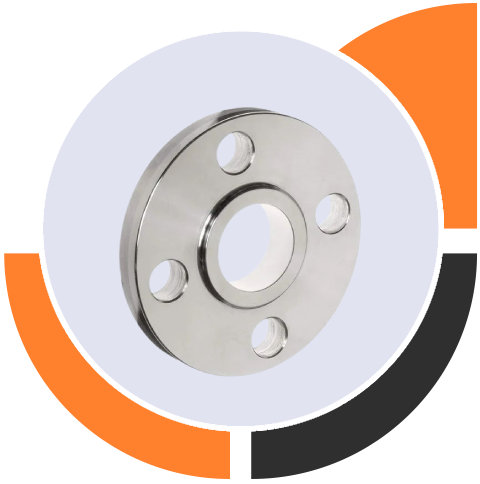
SORF (Slip-On Raised Face)Slides over the pipe and gets welded for easy installation in low-pressure systems.
-
BLRF (Blind Raised Face)Closes off pipe ends; used for testing or sealing flow in a system.
-
SWRF (Socket Weld Raised Face)Pipe fits into a recessed area and is welded around the edge. Ideal for small-bore, high-pressure lines.
-
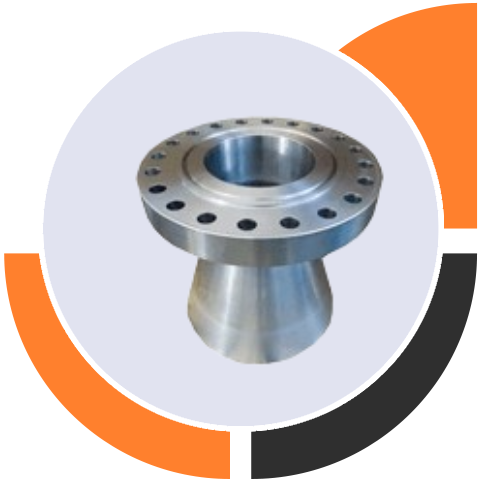
WNRF (Weld Neck Raised Face)Has a long, tapered hub and welds to the pipe for strong, leak-proof joints under high pressure.
Face Forms
-
Raised Face (RF)The most common type has a raised surface that improves gasket sealing in medium to high pressure.
-
Ring Type Joint (RTJ)Uses a metal ring for sealing and works well in high-pressure, high-temperature services.
-
Flat Face (FF)Flat surface flange used with cast iron or low-pressure piping where full face gasket is needed.
-
Lap-Joint Face (LJF)Used with stub ends and are easy to align and install. Good for systems that need frequent dismantling.
Contact us today to discuss how Nickel Alloy 201 Flanges can benefit your application. Whether you need guidance in selecting the right pipes or have specific requirements, our team of experts is here to help you find the optimal solution.
Technical Details & Delivery Condition
The below chemical makeup of Nickel Alloy 201 with the exact elements helps understand how it perform under stress, temperature, and chemical exposure.
| Element | Composition (%) |
| Nickel (Ni) | 99.0 min |
| Carbon (C) | 0.15 max |
| Copper (Cu) | 0.50 max |
| Manganese (Mn) | 0.35 max |
| Iron (Fe) | 0.30 max |
| Silicon (Si) | 0.35 max |
| Sulfur (S) | 0.03 max |
| Phosphorus (P) | 0.03 max |
The key strength, hardness, and flexibility values of Alloy 201 Flanges are mentioned below. This will help decide if the flange fits your pressure, load, and thermal needs.
| Grade | Density | Melting Point | Tensile Strength | Yield Strength (0.2%Offset) | Elongation |
|---|---|---|---|---|---|
| Nickel 201 | 8.9 g/cm3 | 1446 °C (2635 °F) | Psi – 67000 , MPa – 462 | Psi – 21500 , MPa – 148 | 45 % |
This table helps compare Nickel Alloy 201 with other global grades. It’s useful when matching or replacing flanges across different standards.
| STANDARD | UNS | WNR. | JIS | EN |
|---|---|---|---|---|
| Nickel 201 | N02201 | 2.4068 | NW 2201 | LC-Ni 99 |
This section covers all standard dimensions to ensure your flange fits with pipes, valves, and fittings without extra adjustment.
| AS 2129 Flange | Table C | 95 | 67 | 4 | 13 | 14 |
| Table D | 95 | 67 | 4 | 13 | 14 | |
| Table E | 95 | 67 | 4 | 13 | 14 | |
| Table F | 95 | 67 | 4 | 13 | 14 | |
| Table H | 114 | 83 | 4 | 16 | 17 | |
| Table J | 114 | 83 | 4 | 16 | 17 | |
| ISO 7005 (DIN) Flange | PN6 | 80 | 55 | 4 | M10 | 11 |
| PN10 | 95 | 65 | 4 | M12 | 14 | |
| PN16 | 95 | 65 | 4 | M12 | 14 | |
| PN20 | 90 | 60.5 | 4 | M14 | 16 | |
| PN25 | 95 | 65 | 4 | M12 | 14 | |
| PN40 | 95 | 65 | 4 | M12 | 14 | |
| AS4087 | PN14 | 95 | 67 | 4 | M12 | 14 |
| ANSI B16.5 | ANSI 150 | 89 | 60 | 4 | 13 | 16 |
| ANSI 300 | 95 | 67 | 4 | 13 | 16 | |
| ANSI 600 | 95 | 67 | 4 | 13 | 16 | |
| ANSI 900 | 121 | 83 | 4 | 19 | 22 | |
| ANSI 1500 | 121 | 83 | 4 | 19 | 22 |
This chart helps to calculate shipping loads, support structure needs, or storage plans. It includes approximate weights per size and type.
| Standard | Pressure Rating |
|---|---|
| ANSI |
|
| DIN |
|
| UNI /EN /DIN |
|
The below chart provides details of how much pressure the flanges can handle across different temperatures. Important for designing safe systems.
| Size in (In) | Size in (Mm) | No of Bolts | Bolt UNC Size | RF Stud Length | Stud ISO Size | Machine Flange Bolt Len |
|---|---|---|---|---|---|---|
| 1/2 | 15 | 4 | 1/2 | 55 | M14 | 50 |
| 3/4 | 20 | 4 | 1/2 | 65 | M14 | 50 |
| 1 | 25 | 4 | 1/2 | 65 | M14 | 55 |
| 1 1/2 | 40 | 4 | 1/2 | 70 | M14 | 65 |
| 2 | 50 | 4 | 5/8 | 85 | M16 | 70 |
| 3 | 80 | 4 | 5/8 | 90 | M16 | 75 |
| 3 1/2 | 90 | 8 | 5/8 | 90 | M16 | 75 |
| 6 | 150 | 8 | 3/4 | 100 | M20 | 85 |
| 8 | 200 | 8 | 3/4 | 110 | M20 | 90 |
| 10 | 250 | 12 | 7/8 | 115 | M24 | 100 |
| 1 1/4 | 32 | 4 | 1/2 | 70 | M14 | 55 |
| 2 1/2 | 65 | 4 | 5/8 | 90 | M16 | 75 |
| 5 | 125 | 8 | 3/4 | 95 | M20 | 85 |
| 16 | 400 | 16 | 1 | 135 | M27 | 115 |
| 18 | 450 | 16 | 1 1/8 | 145 | M30 | 125 |
| 20 | 500 | 20 | 1 1/8 | 160 | M30 | 140 |
Nickel Alloy Flanges Grades We Offer
Difference Between Nickel Alloy 201 Flanges vs Nickel Alloy 200 Flanges
Nickel Alloy 201 Flanges perform better at high temperatures due to lower carbon. They are ideal for food, chemical, and electronics applications requiring purity and thermal stability. Nickel 200 flanges have higher strength and conductivity, making them better suited for cooler setups and structural applications. 201 is better at dealing with heat stress, whereas alloy 200 flanges is best suited to medium-temperature and strength-focused applications. Nickel Alloy 201 is suitable for clean, high-temperature environments and provides corrosion resistance, purity and crack-free performance. It provides a better balance of performance and cost than many pure nickel options.
Manufacturing Process of Nickel Alloy 201 Flanges
Nickel Alloy 201 Flanges are made using advanced techniques to meet global quality standards. We begin by choosing pure Nickel UNS N02201 material. Sheets or bars are cut, heated, and shaped into flanges using precise machines. The parts are welded where needed, then heat-treated for extra strength. Surface finishing for smooth contact and protection. Each step includes checks for size, shape, and flaws. Final testing and inspections confirm that every flange meets standards like ASTM B564 and ANSI B16.5. Only approved pieces go for packing and delivery.
Plate

Shear

Press

Inspection

Lathe

Drilling

Cleaning

Flange

Inspection

Analytic

Marking

Packing & Shipping

Nickel Alloy 201 Flanges Application
Nickel Alloy 201 Flanges are used in piping systems across many industries. In the petrochemical and oil & gas industries, they connect pipelines carrying reactive fluids. Power plants and heat exchangers use them for high-temperature lines. In chemical units, they handle acids, alkalis, and solvents without contamination. Offshore platforms use these flanges where moisture and salt levels are high. Food processing units use them in steam lines and clean systems to maintain hygiene. Their clean nature and low reactivity also make them ideal for electronic and medical-grade equipment.
Our Packaging Standard
Nickel Alloy 201 Flanges are packed safely using export-grade materials to avoid damage during transport. We use HDPE wrap, shrink film, strong wooden crates or pallets, and protective end caps. We also provide custom packing based on client needs. Each item comes labeled with grade, size, standard, pressure class, and heat number for easy tracking. For local delivery, we use road or rail. For export, we manage sea or air shipping based on your schedule. In-stock flanges ship the same day. Custom orders follow fixed delivery times. Every order comes with invoice, test reports, and export papers if needed.
Why Choose Us?
Midland Alloys is a leading Alloy 201 Flange manufacturer and supplier offering custom sizes, fair prices, and global delivery. Our advanced facilities and skilled team ensure every flange meets top standards. We deliver on time and handle small to bulk orders with ease. We follow ISO and other key quality norms to ensure safety and satisfaction in every product.
FAQ
Nickel 200 and Nickel 201 flanges are both widely used across India, depending on the application.
Yes. Nickel Alloy 201 flanges are ideal for high-purity systems due to low carbon and high chemical stability.