Choosing the wrong stainless steel pipe grade cuts service life short, drives up maintenance costs, and in extreme environments, causes premature failure. For engineers and procurement teams across chemical processing, food manufacturing, marine systems, or high-temperature furnaces, the grade decision carries real operational weight.
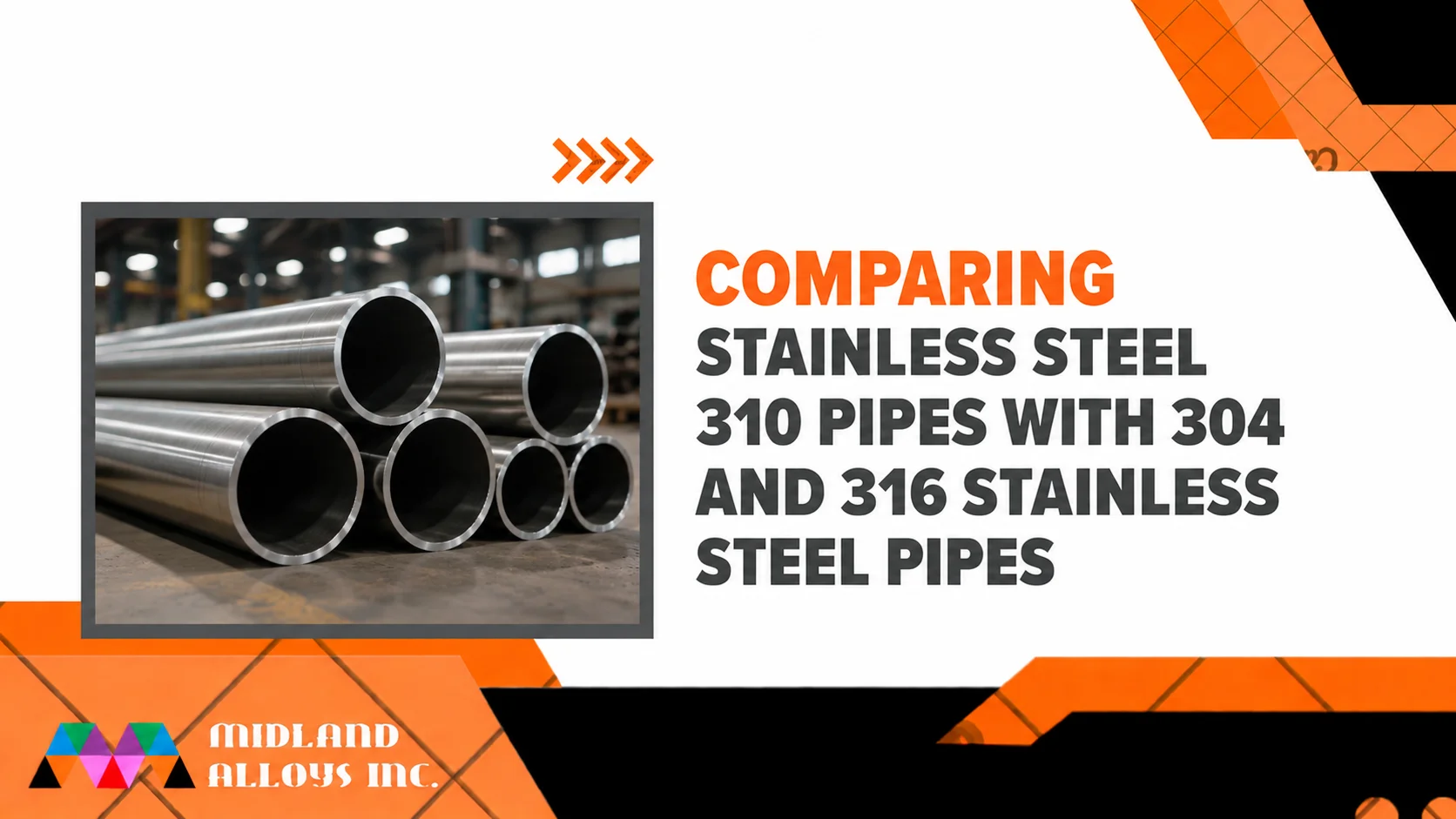
Three grades dominate most project specifications: stainless steel 304 pipes, stainless steel 316 pipes, and 310 Stainless Steel pipes. Each delivers distinct performance in specific environments. This guide breaks down the differences across temperature tolerance, corrosion resistance, and application fit, so the right grade is used in the right system from the beginning.
Why Stainless Steel Grade Selection Matters
Operating conditions dictate material behavior. A pipe that handles food-grade water reliably will corrode in a chloride-heavy marine atmosphere within months. One rated for atmospheric corrosion resistance alone fails structurally at furnace temperatures above 900°C.
Factors that drive every grade decision are continuous operating temperature, the chemistry of the surrounding environment, expected service life, and maintenance frequency. When these align with a grade’s metallurgical profile, pipes hold pressure ratings longer and reduce total cost of ownership. Mismatches do the opposite.
Understanding Stainless Steel 304, 316, and 310 Pipes
Stainless Steel 304 Pipes
SS 304 carries 18% chromium and 8% nickel, giving it solid oxidation resistance in ambient and mildly corrosive environments. Stainless steel 304 pipes and tubes suit general-purpose fabrication, food processing equipment, and water distribution lines. The grade welds cleanly, keeps fabrication costs down, and meets ASTM A312 requirements for pressure service conditions below 870°C. Where the environment stays non-aggressive and chloride exposure stays low, SS 304 delivers reliable performance at accessible cost.
Stainless Steel 316 Pipes
Stainless steel 316 pipes add 2% to 3% molybdenum to the 304 base composition. That addition transforms performance in chloride-bearing environments. Molybdenum tightens the passive film, making it harder for chloride ions to initiate pitting at crevices and weld zones. Marine pipework, pharmaceutical clean-in-place systems, and chemical plants handling halide solutions rely on SS 316 for this pitting resistance advantage. When chloride concentration exceeds what SS 304 manages, SS 316 is the practical next step without jumping to a specialty alloy.
Stainless Steel 310 Pipes
310 stainless pipe carries 25% chromium and 20% nickel, the highest alloy content among the three grades. That composition targets one specific challenge: sustained performance between 1,000°C and 1,150°C. Where SS 304 and SS 316 scale and lose tensile strength above 870°C, SS 310 maintains structural integrity and resists oxidation at temperatures that would degrade lower-alloy grades within weeks. Furnace components, kiln liners, and thermal processing equipment running at elevated output all depend on this metallurgical advantage.
Temperature Resistance Comparison
Heat resistance separates SS 310 from the other two grades decisively. SS 304 handles continuous service up to around 760°C before scaling becomes a concern. SS 316 performs within a similar range, gaining no meaningful thermal advantage despite the molybdenum addition.
At 1,050°C continuous service, 310 SS pipe retains enough tensile strength and oxidation resistance to stay structurally sound. Radiant tube applications, annealing furnace internals, and heat-treatment baskets running at 1,000°C cycles need this thermal stability. For high-temperature stainless steel pipes in thermal processing, SS 310 sits in a category of its own relative to the other two grades.
Corrosion Resistance Comparison
In atmospheric and mildly industrial environments, SS 304 holds its surface well, resisting rust and oxidation from moisture and oxygen. Kitchens, pharmaceutical packaging lines, and general manufacturing plants see long service from SS 304 in these conditions.
When the environment introduces chlorides through seawater, brine, or industrial chemicals, SS 316 takes over. Molybdenum reduces the rate at which chloride ions penetrate the passive film. Pitting that initiates within months on SS 304 in salt-spray environments can take years to reach a comparable depth on SS 316, making it the preferred corrosion resistant stainless steel pipe grade for marine and chemical service.
SS 310 brings a different angle. Its strength lies in hot-gas oxidation resistance, not wet-corrosion environments. Against liquid chloride exposure or aggressive acids at ambient temperature, SS 310 offers no advantage over SS 316. Where it excels is resisting sulphur-bearing gases, combustion atmospheres, and oxidising conditions at elevated temperatures.
Mechanical Properties and Fabrication Comparison
All three grades share an austenitic microstructure, giving them good toughness at both low and high temperatures. Both SS 304 and SS 316 are easy to weld using normal austenitic filler metals and work-hardened by cold-forming operations without serious fabrication problems.
SS 310 needs more care. The higher alloy content increases the chance of sigma phase precipitation during slow cooling between 600°C and 900°C, with a corresponding reduction in toughness at room temperature. Welding with matching filler or a compatible high-nickel filler prevents hot cracking. Teams fabricating stainless steel pipes for industrial applications in high-temperature duty should plan the welding procedure qualification before committing SS 310.
Common Industrial Applications of 304, 316, and 310 Stainless Steel Pipes
Applications of SS 304 Pipes
Food processing conveyors, beverage handling lines, water treatment infrastructure, and dairy plant tubing all run on SS 304. The grade meets FDA and 3A sanitary standards in food-contact applications and supports hygienic cleaning cycles without retaining contamination.
Applications of SS 316 Pipes
Marine deck fittings, subsea systems, pharmaceutical water-for-injection networks, and chemical reactors handling halide compounds rely on SS 316. It also handles bleach solutions and acetic acid at moderate concentrations where SS 304 would pit within a single service season.
Applications of SS 310 Pipes
Continuous annealing furnaces, radiant tubes, heat exchangers above 900°C, cement kiln components, and industrial incinerators carry SS 310 in their high-temperature circuits. For stainless steel pipes for industrial applications in these sectors, Midland Alloys supplies a full range of SS 310 and 310S pipes in standard and custom dimensions for demanding service environments.
Which Stainless Steel Pipe Grade Should You Choose?
Three operating conditions narrow the choice quickly.
Choose SS 304 when service temperature stays below 760°C, chloride exposure stays minimal, and cost-per-metre matters. Food plants, water systems, and general fabrication fit this profile.
Choose SS 316 when chlorides appear in the service environment, whether from seawater, brine, or coastal atmosphere. The molybdenum content justifies the 20% to 30% price premium over SS 304 by extending pitting resistance and cutting maintenance frequency.
Choose SS 310 when operating temperatures exceed 900°C or the system runs in sulphur-bearing combustion gas atmospheres. No specification adjustment makes SS 304 or SS 316 compensate for that thermal stability gap. The stainless steel pipe grade comparison comes down to one rule: where heat dominates, SS 310 leads; where chlorides dominate, SS 316 leads; where neither is a factor, SS 304 delivers the most cost-efficient result.
Conclusion
SS 304 covers the broad middle ground of non-aggressive service at the lowest alloy cost. SS 316 steps in when chloride corrosion threatens pitting damage in marine and chemical environments. SS 310 operates where both grades run out of thermal headroom, sustaining integrity above 1,000°C.
The grade is matched to the actual operating condition to determine real world pipe performance and service life. Contact Midland Alloys to confirm grade availability, dimensional stock and mill certification requirements for your next project.