Seamless pipes are used across a wide range of industries where pipe strength and pressure handling actually matter. The seamless pipe uses vary quite a bit depending on the sector, but the common factor is always reliability. Welded pipes simply do not hold up the same way under certain conditions. Seamless pipe usage has been growing steadily, and this blog covers what these pipes are, where they are used, and what makes them worth choosing.
What Is a Seamless Pipe?
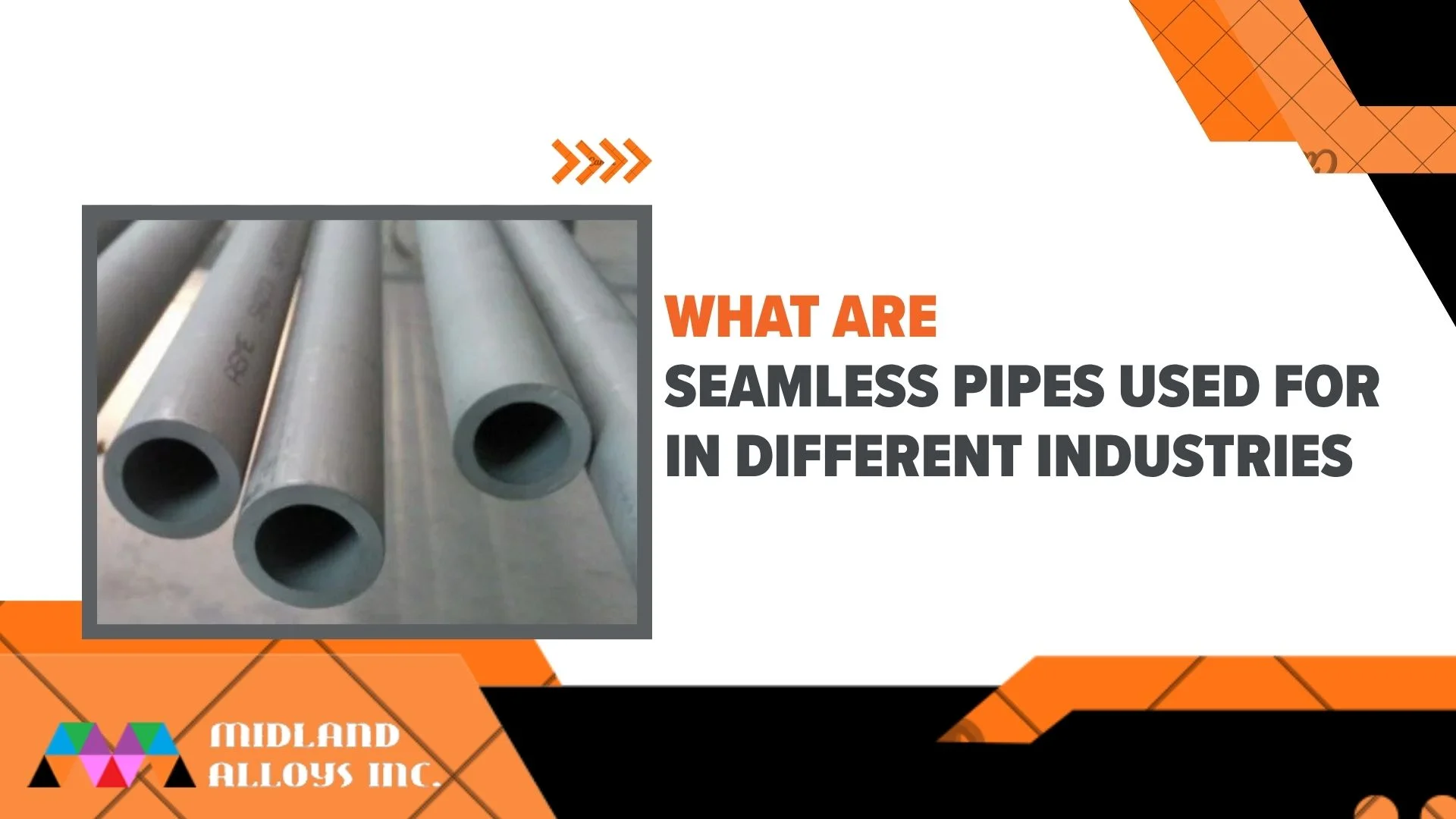
A seamless pipe is a pipe with no welded joint anywhere along its length. It is made from a solid steel billet, which gets pierced and shaped into a hollow tube through a rolling process. No seam, no joint.
Because the entire stainless steel seamless pipe comes from one solid piece of material, the wall thickness stays consistent throughout. The strength is distributed evenly, which matters a lot in high-pressure or high-temperature situations. This is why seamless pipes show up in critical applications where a standard welded pipe would not be appropriate or safe enough to use.
Why Seamless Pipes Are Preferred in Industries
The main reason industries go with seamless pipes is simple. There is no weld seam, and the weld seam is usually where a pipe fails first. Without it, the pipe handles pressure much better and holds its structure under stress. The wall thickness is uniform, and there are no weak spots. In extreme heat, corrosive fluids or heavy mechanical loads, seamless pipes perform consistently, where welded pipes tend to give out. Most industries dealing with critical systems do not take the risk with welded alternatives.
Applications of Seamless Pipes Across Different Industries
Seamless pipes are used across several industries, mostly because they hold up well under pressure and do not fail at joints the way welded pipes can. Strength and consistency are the two things that drive their selection in most cases.
The application-based usage of seamless pipes lines up closely with what each industry actually needs from a pipe. Looking at seamless pipes in different industries makes it clear that the same core properties, no seam, uniform structure, and high pressure tolerance, solve different problems depending on the sector.
Oil and Gas
Seamless pipes are used in drilling operations, high-pressure pipelines, and offshore systems where the pipe needs to handle extreme downhole pressure and aggressive environmental conditions without failure.
Power Plants
Boilers and heat exchangers in power plants run at very high temperatures and pressures. Seamless pipes are selected for their ability to withstand steam and thermal stress uniformly over long periods of service without failure of structure.
Construction
In structural frameworks, seamless pipes are used for load-bearing applications where dimensional consistency and reliable strength are needed. Irregular wall thickness in a structural pipe is not acceptable in most serious construction work.
Automotive
Hydraulic systems and certain mechanical components in vehicles use seamless pipes to keep fluid pressure contained and controlled. Any leakage or deformation in these systems causes immediate performance issues.
Chemical Industry
Seamless pipe usage in chemical plants comes down to one thing mostly. Corrosive fluids need containment that does not have weak points. Welded joints are vulnerable in these environments, seamless pipes are not.
Advantages of Seamless Pipes
Seamless pipes have a few clear advantages that keep coming up across industries. None of these are complicated, they just matter practically.
High Strength and Durability
No weld seam means the pipe is uniformly strong across its entire length. This holds up well in heavy-duty applications where stress on the pipe is constant or unpredictable.
Excellent Pressure Handling
Seamless pipes can withstand high pressure without bending or breaking. Which is why hydraulic systems and other high‑pressure fluid lines usually use them instead of welded pipes.
Uniform Structure
Wall thickness stays consistent throughout the pipe. There are no inconsistencies that could become problem points under load or pressure.
Reduced Risk of Leakage
Because seamless pipes have no joints, there are fewer potential points where leaks can form. In high-pressure or corrosive conditions, this becomes a simple yet very important benefit compared to welded pipes.
Long Service Life
Seamless pipes tend to last longer in demanding conditions. Less structural vulnerability means less wear over time, and fewer replacements or maintenance interventions needed.
Limitations of Seamless Pipes
- Higher cost compared to welded pipes: Manufacturing from a solid billet takes more material and process steps, which pushes the cost up noticeably compared to welded pipe options.
- Limited availability in large diameters: Beyond certain size ranges, producing seamless pipes becomes technically difficult, so large diameter options are not always easy to source.
- Longer production time: The billet piercing and rolling process takes more time than welded pipe production, which can affect lead times on orders.
How to Choose the Right Seamless Pipe
Start with the pressure and temperature conditions the pipe will face. Those two factors determine the material grade and wall thickness needed. Size selection follows from the flow requirements and system design. If the environment involves corrosive substances or extreme heat. It limits the choices of materials. Buy from suppliers who provide proper certification and compliance paperwork. A pipe that meets the spec on paper but lacks verified testing is not worth the risk in critical applications.
Why Choose Midland Alloys Inc. for Seamless Pipes
Midland Alloys Inc. supplies seamless pipes to various sectors for various industrial purposes. The pipes meet the standards of recognised international quality and safety standards. Each product is thoroughly tested before it is shipped. Our stock includes many different materials, alloy grades and sizes. This makes it easier to find a suitable option for most needs.
Project schedules depend on on-time delivery, so shipments are carefully managed. Built to outlast standard requirements, products focus on endurance over basic compliance. Affordable pricing supports large purchases. When clarity is needed, skilled staff guide choices efficiently, limiting repeated exchanges. Priority is given to accuracy, so adjustments are rare.
Conclusion
Seamless pipe uses cover oil and gas, power generation, construction, automotive, and chemical processing, each relying on its pressure resistance and structural consistency. Seamless pipe usage keeps growing because these pipes hold up where others do not. For industries where pipe failure is not an option, seamless pipes remain the practical and reliable choice.