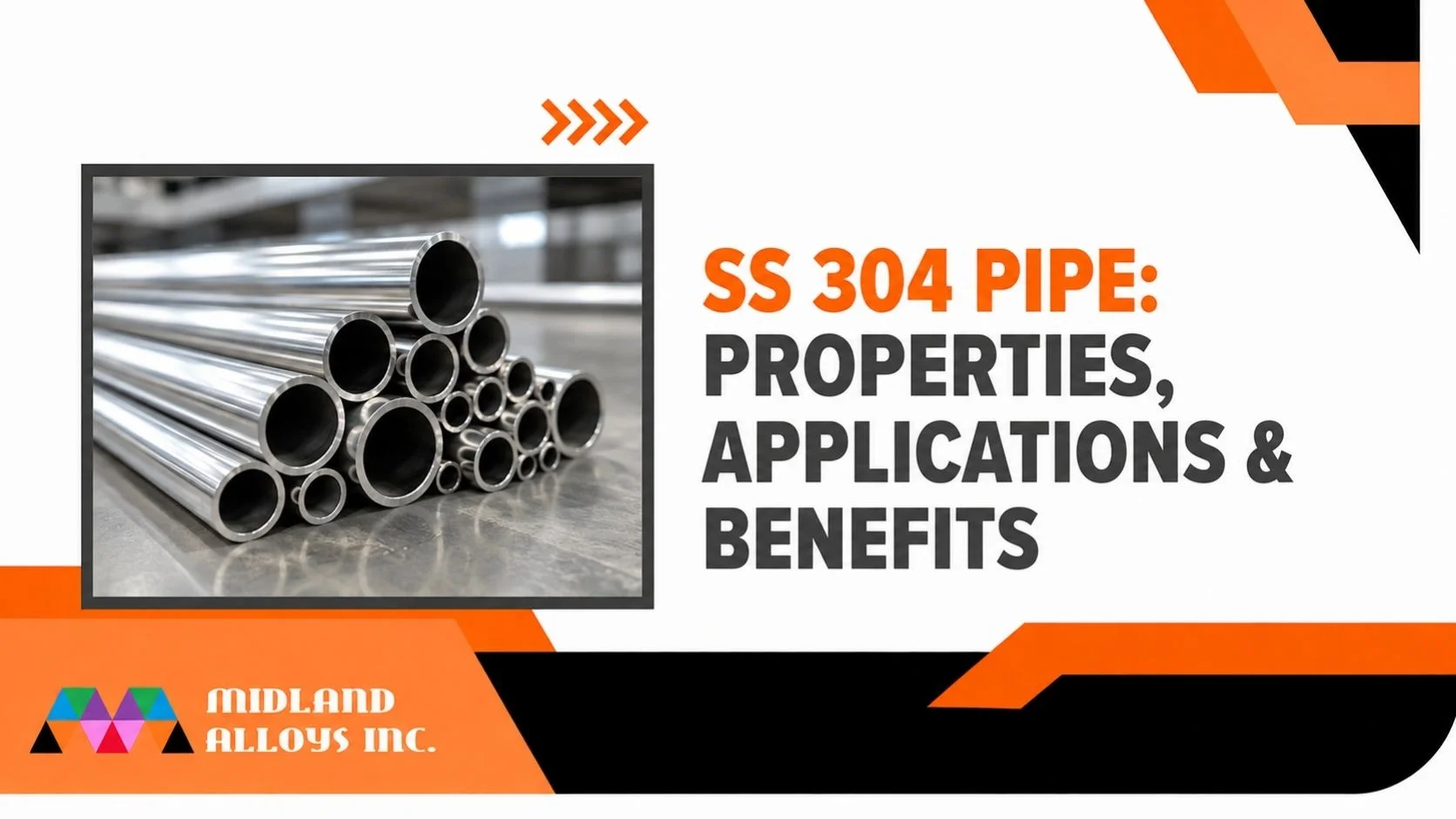
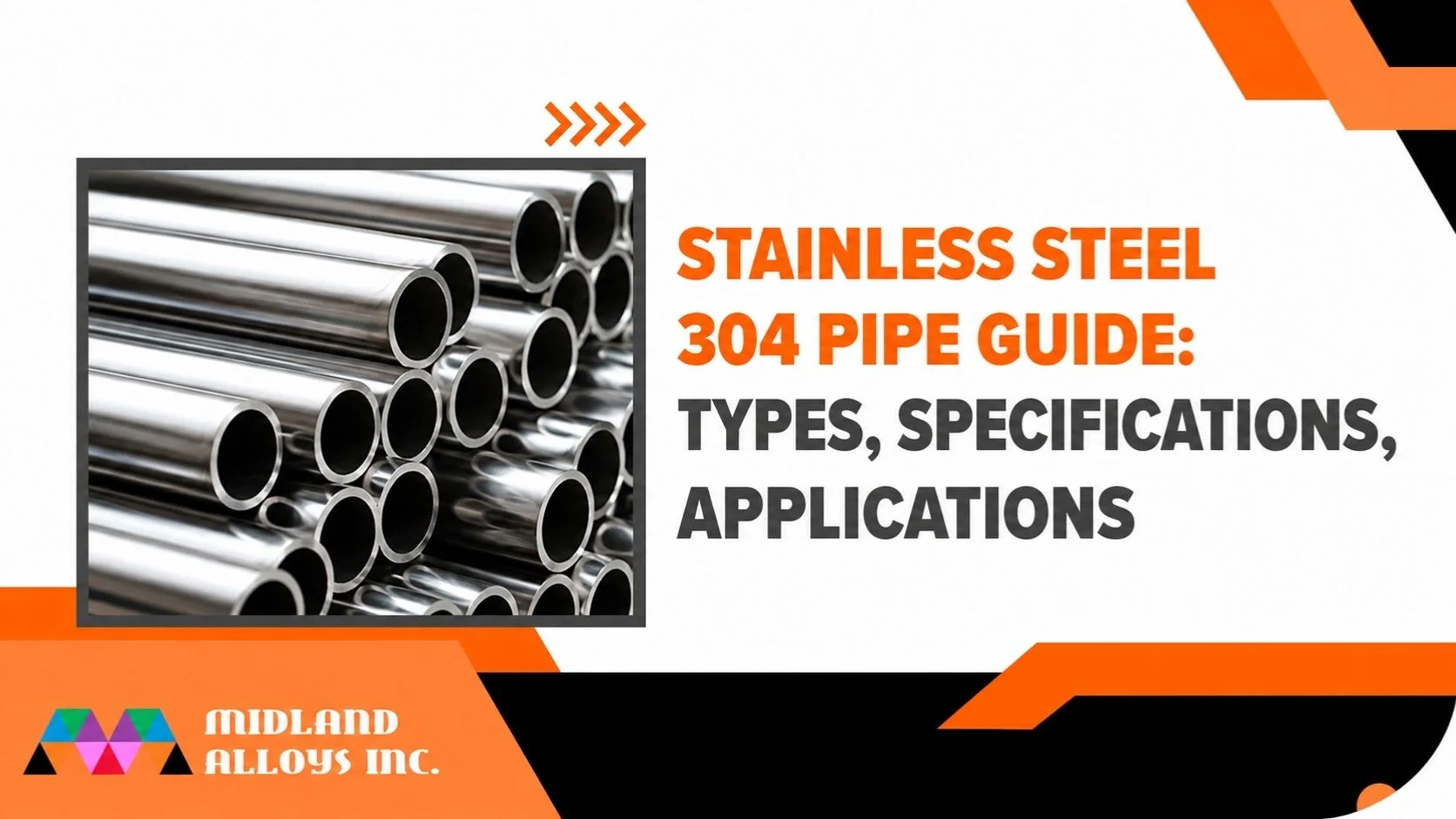
Stainless Steel 304 Pipe is one of the most commonly used piping materials across industries. The chromium and nickel in the alloy give it good resistance to rust and corrosion, and it holds up well in wet or humid conditions. It’s also easy to weld and bend into shape, which is why fabricators tend to reach for it first. This guide covers the types available, the specifications you should check, where it gets used, and a few things to know before you order. If you’re sourcing in bulk, working with a proper Stainless Steel Pipes Manufacturer usually makes the whole process smoother.
What Is Stainless Steel 304 Pipe?
SS 304 pipe is an austenitic stainless steel, made up of roughly 18% chromium and 8% nickel. The chromium is what does most of the work here. It forms a thin oxide layer on the surface, and that layer repairs itself if it gets scratched. That’s basically why 304 doesn’t rust the way ordinary steel does. Nickel adds flexibility to the mix, so the pipe can be bent or shaped during fabrication without cracking. As for pipe versus tube, the difference depends on the use rather than looks. Pipes are meant to carry fluids or gases and are specified by nominal bore and schedule. Tubes are more for structural or precision work and are measured by exact outside diameter.
Types of Stainless Steel 304 Pipes
- SS 304 Seamless Pipe: No weld joint at all, made from a solid billet. Works well for high-pressure lines where a seam could be a weak spot.
- SS 304 Welded Pipe: Rolled from sheet and welded along the seam. Used a lot in general industrial setups and standard fluid lines.
- SS 304 ERW Pipe: Made using electric resistance welding, so no filler metal is needed. Cheaper option, fine for lower-pressure jobs.
- SS 304 Polished/Decorative Pipe: Given a mirror or brushed finish. Used where looks matter as much as function, like railings or visible fittings.
Stainless Steel 304 Pipe Specifications and Properties
ASTM A312 is the standard most people check against for seamless, welded, and cold-worked 304 pipes. It covers the chemical composition, tensile requirements, and dimensional tolerances the mill has to meet. Outside diameters run from about ⅛ inch up to 30 inches, and wall thickness is set by schedule numbers like SCH 5S, 10S, 40S, and 80S. Minimum tensile strength sits around 515 MPa, and the pipe can handle temperatures up to 870°C in intermittent service. It welds fine with TIG or MIG without much prep work needed beforehand. Iif you want high-quality SS 304 Pipe, always check the mill test certificate against the ASTM or ASME spec mentioned in your order. Tolerances can shift depending on the product form, so it’s worth confirming rather than assuming.
Applications of Stainless Steel 304 Pipe
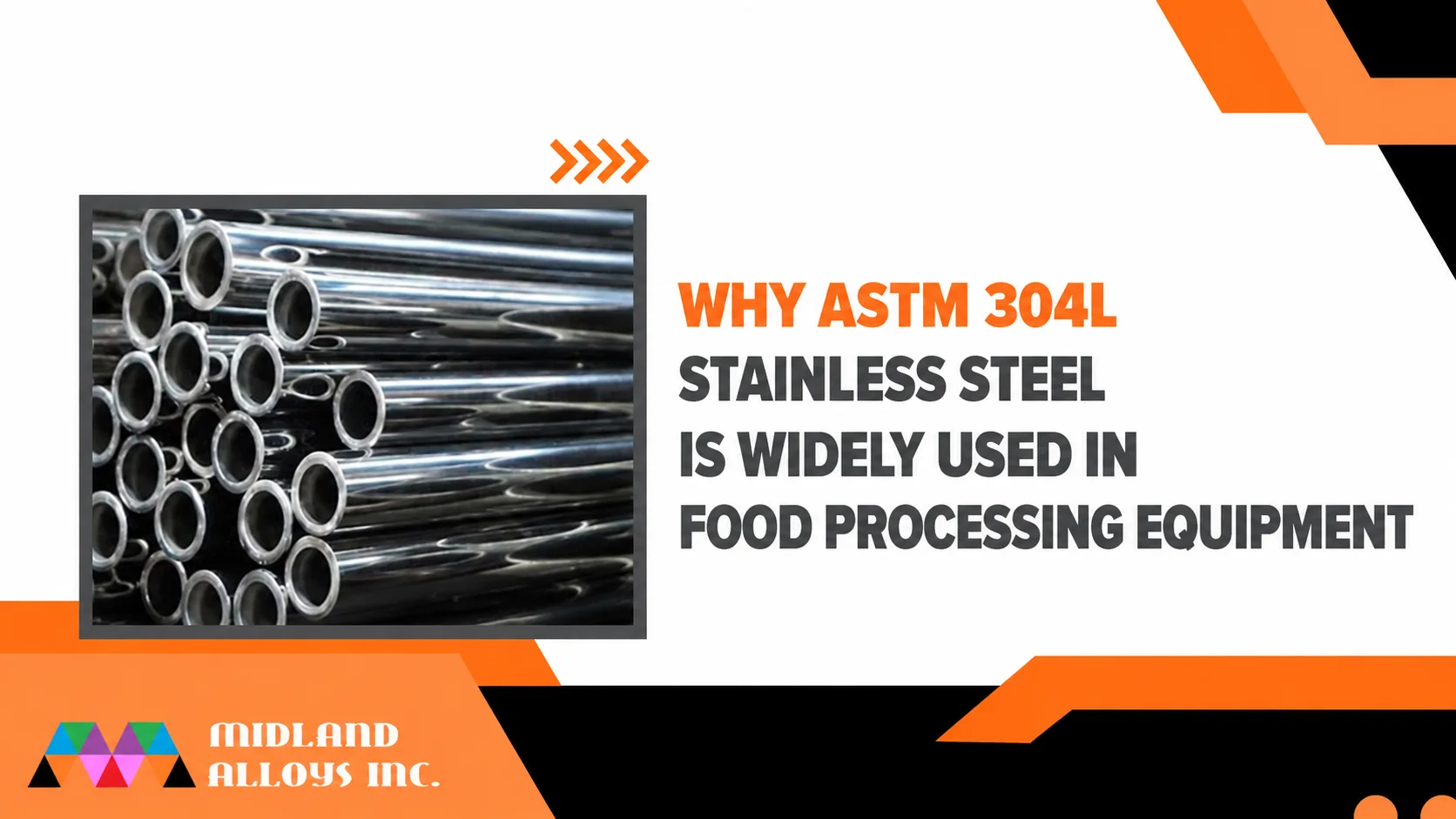
- Food and beverage processing: Doesn’t react with food product, and it can take repeated washdowns with harsh cleaning chemicals.
- Chemical processing: Stands up to a range of acids and alkalis without breaking down.
- Pharmaceutical equipment: Smooth surfaces make it easier to keep things hygienic during drug manufacturing.
- Water and fluid handling: Resists scaling and pitting, so pipes last longer in water systems.
- Petrochemical industries: Hold up under thermal stress in refining setups.
- Architectural and construction projects: Polished finish plus structural strength, good for railings and cladding.
- Kitchen and commercial equipment: Easy to clean, doesn’t rust, so it’s the default for sinks and countertops.
Know the Difference: SS 304 vs 304L Pipe
304L has a lower carbon content, capped at 0.03%, compared to 0.08% in regular 304. That small difference matters a lot after welding. Standard 304 can develop chromium carbides at the grain boundaries during welding, a process called sensitisation, and this weakens corrosion resistance near the weld. 304L doesn’t have this problem to the same extent, so it holds its corrosion resistance in the heat-affected zone without needing extra annealing afterwards. For welded assemblies in corrosive environments, most fabricators go with 304L. See Know the Difference: SS 304 vs 304L Pipe for a fuller breakdown.
How to Choose the Right SS 304 Pipe?
Start with construction type. Seamless is commonly used for pressure-critical lines; welded works fine for general use. From there, match the diameter and wall thickness to the flow rate and pressure the system needs. Temperature and pressure conditions decide what schedule to pick. Think about what’s actually flowing through the pipe, since that can decide whether standard 304 or 304L is the better fit, especially with welded pipe. Double-check the ASTM or ASME standard against your project spec, pick a surface finish that suits the application, and ask for mill test certificates or inspection reports before the order ships. The supplier matters just as much as the specification sheet. Consistent quality usually depends on how well they test and trace their material.
Conclusion
Stainless Steel 304 Pipe works across a lot of different settings, from high-pressure seamless lines to polished pipe used in visible fittings. Getting the right one down to pressure, temperature, media, and fabrication method saves from unavoidable problems later. Contact Midland Alloys Inc. for a quote on your SS 304 pipe requirement.